OAN Staff Katherine Mosack
10:05 AM – Saturday, January 31, 2026
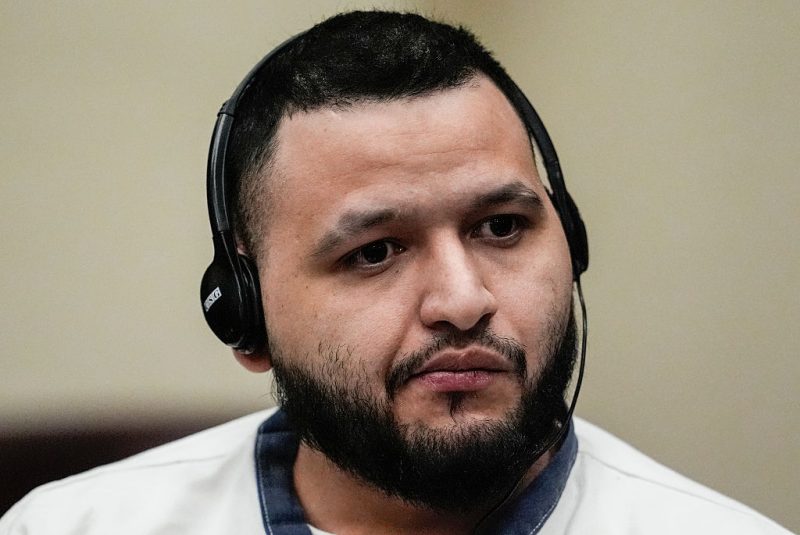
Venezuelan illegal immigrant Jose Ibarra, convicted of murdering Georgia nursing student Laken Riley in 2024, has sought a new trial, prompting a hearing to determine if there were errors during the original proceedings.
On Friday, Clarke County Superior Court Judge H. Patrick Haggard heard testimony from a DNA expert retained by Ibarra’s attorneys to analyze evidence from the case. The expert, Ruth Ballard, told trial attorneys she would need six weeks to come up with a complete report of her findings, prompting attorneys to request a delay, but the judge proceeded on-schedule.
The judge refrained from making a ruling at the time of the hearing, requesting additional briefings from both sides by March 2nd before he decided whether to grant a new trial.
Before the trial, Ibarra’s lawyers requested the judge not to consider evidence that came from 6the search of two cellphones believed by the state to have belonged to him, arguing that the search warrants used to seize the phones were not valid as police lacked probable cause. Haggard rejected the request.
Attorneys also asked the judge to exclude evidence and expert testimony based on TrueAllele Casework, software that is used for DNA analysis.
One argument raised by the defense was that Ibarra was not mentally competent at the time he committed the crime, which Haggard shot down, reminding them of a court-ordered mental evaluation reviewed by the court in 2024 that found him competent.
Ballard, a forensic serology and forensic DNA expert, focused on the physical evidence collected during the initial investigation, testifying that a pair of bloodstained gloves recovered near Ibarra’s home did not contain Ibarra’s DNA, despite having DNA traced back to Laken Riley and at least one other unidentified individual. She also said that Riley’s sexual assault evidence kit found no male DNA.
During the cross-examination, Prosecutor Sheila Ross pushed back against the defense’s suggestion that Ibarra’s older brother, Diego Ibarra, could have committed the crime.
Ballad confirmed that, according to Y-chromosome Short Tandem Repeat (Y-STR) testing, DNA found under Riley’s fingernails belonged to either Jose Ibarra or his brother Argenis Ibarra, but that TRULEO testing, which uses AI assistance, ruled out Jose Ibarra’s brothers, identifying his DNA. She agreed that a victim would likely have DNA from her attacker under her fingernails after a violent struggle.
Riley’s murder became a core issue for President Donald Trump’s 2024 presidential campaign, providing anecdotal and personal evidence for the negative effects of the Biden administration’s open-border policy.
The hearing came one day after the one-year anniversary of Trump’s signing of the Laken Riley Act on January 29, 2025, the first bill signed into law during his second term. The law requires federal detention of illegal immigrants accused of committing local crimes, such as theft, burglary or assault. If it had been passed before Riley’s death, Ibarra would have been detained earlier that year for a shoplifting citation, keeping him off of her college campus in the first place.
Riley, 22, encountered Ibarra while on a run on the University of Georgia campus. During the 2024 trial, Ross described Ibarra as “hunting for females.”
“When Laken Riley refused to be his rape victim, he bashed her skull in with a rock repeatedly,” Ross stated.
Ibarra was found guilty on all 10 counts, including murder, kidnapping with bodily injury, aggravated battery and assault with intent to rape, hindering an emergency telephone call, tampering with evidence and concealing the death of another. He is currently serving a life sentence without parole in a Georgia state prison.
Stay informed! Receive breaking news alerts directly to your inbox for free. Subscribe here. https://www.oann.com/alerts
What do YOU think? Click here to jump to the comments!
Sponsored Content Below