

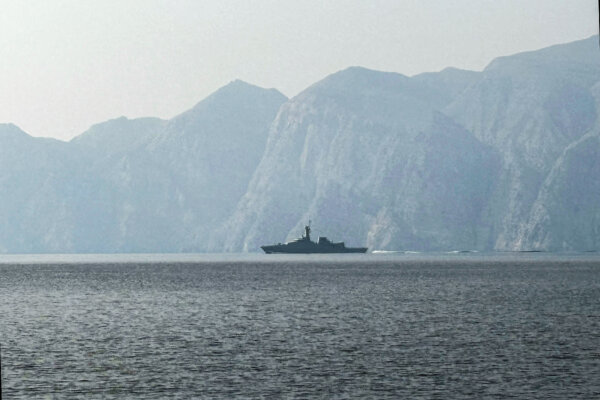
 Britain, France, Germany, Italy, the Netherlands and Japan said on March 19 that they are prepared to help ensure safe passage through the Strait of Hormuz, a key oil shipping lane blocked by Iran that U.S. President Donald Trump has asked allies to assist with opening.
In a joint statement, the countries condemned Iranian attacks on commercial vessels and energy infrastructure, as well as the effective closure of the key shipping route, and called on Tehran to immediately halt its actions.
They said disruption to global energy supplies posed a threat to international peace and security and that freedom of navigation must be upheld under international law.
“We express our deep concern about the escalating conflict. We call on Iran to cease immediately its threats, laying of mines, drone and missile attacks and other attempts to block the Strait to commercial shipping,” they said. “We express our readiness to contribute to appropriate efforts to ensure safe passage through the Strait.”
The escalation sent oil prices sharply higher, with Brent crude rising above $119 a barrel at session highs and U.S. West Texas Intermediate briefly topping $100, as markets reacted to growing risks to Middle East supply and disruptions to flows through the Strait of Hormuz, which handles roughly a fifth of global oil trade.
Trump Musters Allies on Hormuz
In normal conditions, roughly 100 ships, including around 50 oil tankers, pass through the Strait of Hormuz each day, according to Lloyd’s List Intelligence, which tracks maritime data. That flow has slowed to a trickle amid Iran’s blockade, which regime leaders have vowed to use an economic weapon to force oil prices higher and pressure the United States and Israel to halt their attacks.
“I wonder what would happen if we ‘finished off’ what’s left of the Iranian Terror State, and let the Countries that use it, we don’t, be responsible for the so called ‘Strait?’“ Trump wrote in a social media post on March 18. ”That would get some of our non-responsive ‘Allies’ in gear, and fast.”
In their joint statement on March 19, the handful of European countries and Japan said they’re ready to help and encouraged others to act.
“We welcome the commitment of nations who are engaging in preparatory planning,” they said, while pledging to take further steps to stabilize energy markets, including “working with certain producing nations to increase output.”
“Maritime security and freedom of navigation benefit all countries,” they wrote. “We call on all states to respect international law and uphold the fundamental principles of international prosperity and security.”
Iran Steps Up Attacks
Iran intensified attacks on energy infrastructure in the Gulf on March 19, hitting a Saudi refinery, Qatari liquefied natural gas facilities, and two Kuwaiti oil refineries, sending oil prices soaring.
The strikes followed Israel’s March 18 attack on Iran’s South Pars gas field, which is part of the world’s largest natural gas reserve. The Israeli strike prompted Iran to pledge revenge, with the Islamic Revolutionary Guard Corps (IRGC) warning that it would treat strategic energy infrastructure across the Gulf as “direct and legitimate targets.”
Iranian President Masoud Pezeshkian also condemned the Israeli attack, warning of “uncontrollable consequences” that “could engulf the entire world.”
Iran followed through on those threats, striking Saudi Arabia’s Samref refinery in Yanbu and igniting fires at major Kuwaiti oil facilities, while also hitting liquefied natural gas (LNG) infrastructure in Qatar and targeting vessels across the Gulf, with risks appearing to rise for both energy supply and maritime traffic.
The outages—expected to sideline about 12.8 million metric tons per year—threaten supplies to Europe and Asia, including Italy, Belgium, South Korea and China, and could deepen competition for LNG shipments as markets tighten.