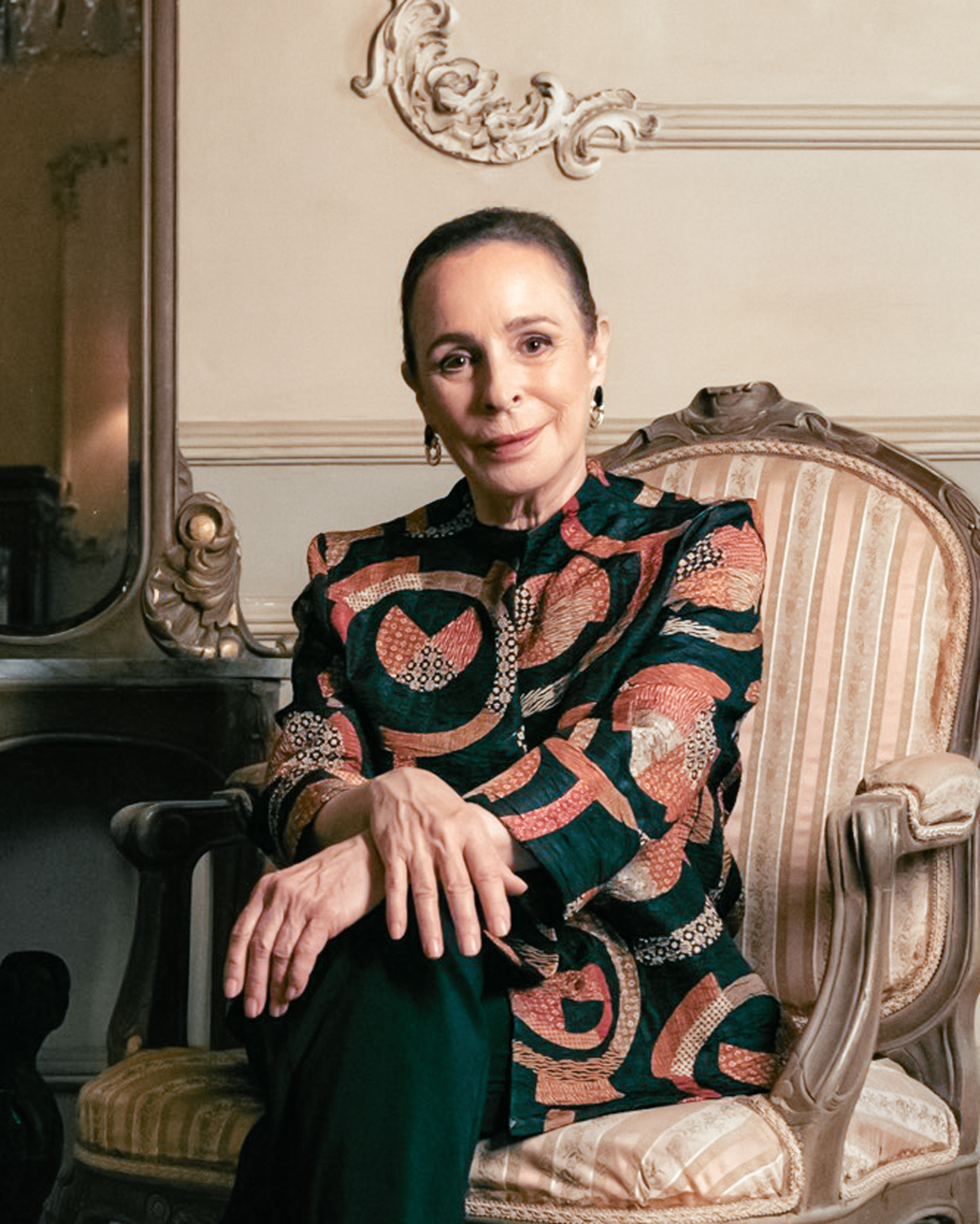
Alina Fernández Revuelta, daughter of former Cuban leader Fidel Castro, has strongly criticized the communist regime her father launched in 1959, stating that Cuba is overdue for a new government.
She fled Havana in 1993 at the age of 37 and settled in Miami, living a modest life much like that of other Cuban exiles.
Born in 1956, Fernández grew up in post‑revolution Havana, as part of the privileged revolutionary elite. Yet from a young age, she became aware of the realities of communism and later emerged as one of the most outspoken critics of her father’s rule, which she described as oppressive.
“For me, it’s been time for a regime change since the late ‘80s,” Fernández said in an exclusive interview with The Epoch Times.
“At the time Fidel Castro died, we were all thinking [his regime] had come to an end, because it was a very personalized and paternalist … narcissistic government. … But it survived.”
Fernández is the daughter of Castro and Havana socialite Natalia Revuelta, who had an affair in the mid-1950s while both were married to others. She grew up with her mother and stepfather, and did not learn that Castro was her biological father until age 10.
She said she still feels haunted by memories from her past. She refers to Castro by name rather than as her father.
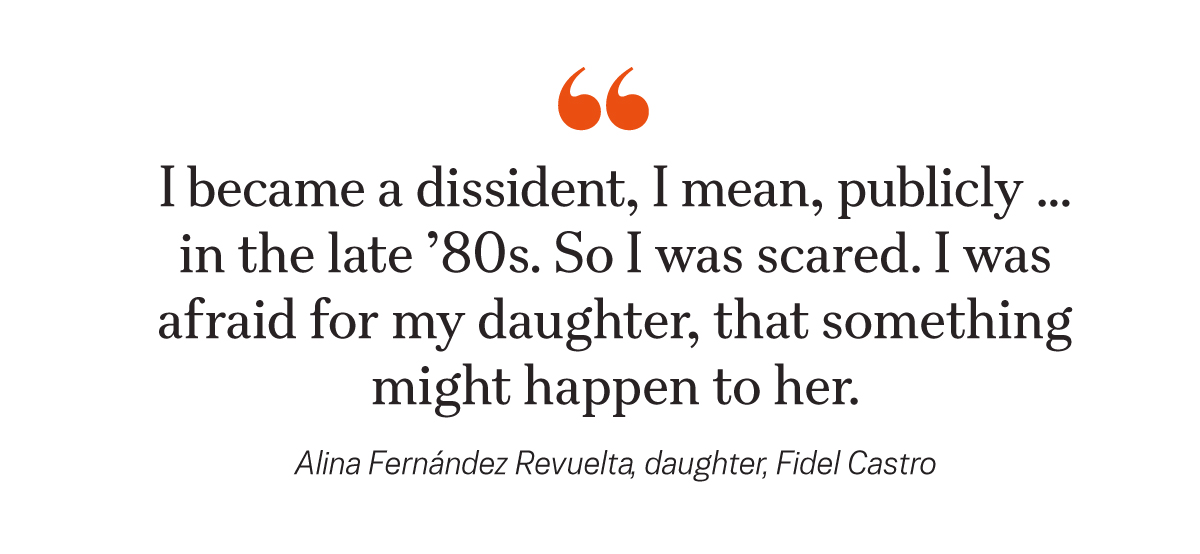
“I became a dissident, I mean, publicly … in the late ‘80s. So I was scared. I was afraid for my daughter, that something might happen to her,” Fernández said.

“I was on the dissident side, so it’s kind of a double burden on her. She was a teenager, and we had what we call at that time, the Special Period.”
For decades, Cuba depended on foreign assistance, primarily from the Soviet Union, which provided substantial subsidies until its collapse in 1991. The end of Soviet support led to a prolonged economic crisis in Cuba known as the “Special Period.”
For Fernández, that period meant “years of total misery” without electricity, food, or public transportation, and schools were closed.
“Some people say that now is worse, but back in the ‘90s, it was terrible, terrible,” she said.
When Fernández had the opportunity to escape, she chose to leave first, leaving her daughter behind because she had no other option. She escaped using the passport of a Spanish tourist who agreed to assist her.
She first traveled to Spain and was then granted political asylum in the United States by the U.S. Embassy in Madrid. On Dec. 21, 1993, she arrived in Atlanta.
Why She Left Cuba
From about the age of 9 or 10, Fernández began to understand what communism and revolution truly meant. It started with something called “voluntary work.”
“I went to my mother to say, ‘I don’t want to go to the voluntary work,’” Fernández recalled. “She said, ‘No, you have to.’”


Under the regime, Cubans, including children, had to participate in unpaid voluntary work to support the state-run economy. Most of the work involved farming, especially harvesting sugar.
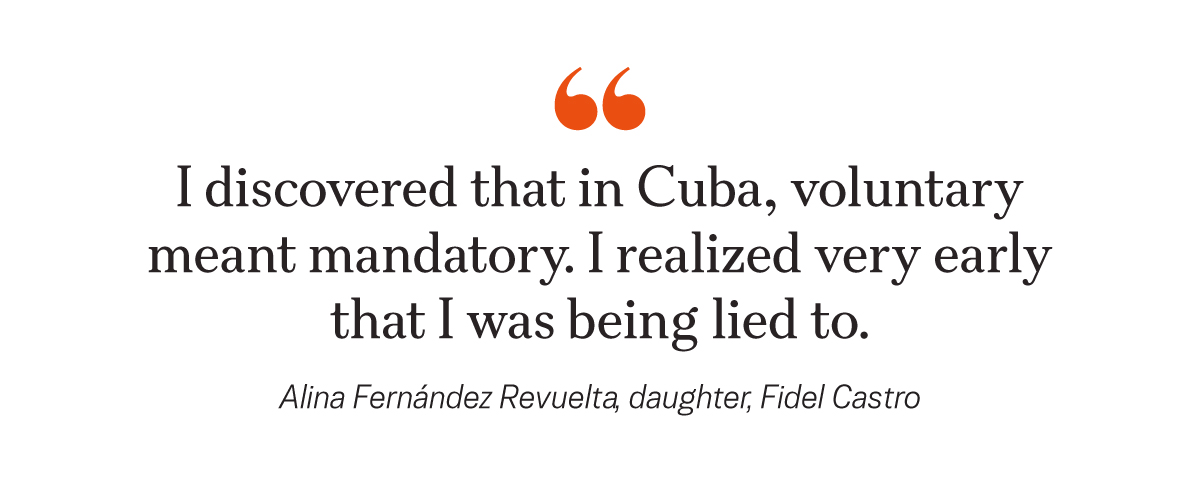
“So I discovered that in Cuba, voluntary meant mandatory,” she said.
For her, it was an early lesson in how language can be manipulated by communists to serve the system.
“I realized very early that I was being lied to,” she said.
Fernández learned from her mother at around age 10 that Castro was her biological father. Until then, she had believed her mother’s husband, prominent cardiologist Orlando Fernández Ferrer, was her father. Because of the country’s laws, she kept his surname instead of adopting Castro’s.
Her stepfather left the country with her sister in the early 1960s.
“So I already had to write down in my school papers and every official paper, I had to feel that I have traitors in the family,” she said.
She stayed in Cuba with her mother, but their relationship was difficult.
According to Fernández, her mother was one of the revolution’s original architects.
“She was there from the beginning … since the preparation of the revolution,” Fernández said.
“She’d been a sympathizer and a very, very faithful subject of the king,” she said, referring to her mother’s loyalty to Castro.

The Mariel crisis in 1980 marked a turning point for her. The Mariel boatlift, as it was also known, was a large-scale exodus from Cuba. It began after a standoff at the Peruvian Embassy in Havana, where more than 10,000 Cubans asked for asylum because of the economic crisis. In response, Castro opened the port of Mariel to allow people to leave.

From April to October 1980, roughly 125,000 Cubans fled to the United States from Mariel Harbor.
The regime called those leaving names such as gusanos (worms) and traitors. They also organized mobs to intimidate and harass people as they left.
Witnessing this made Fernández question the regime even more.
“People were encouraged to go and beat those people and scream at them and humiliate them and, in some cases, kill them because they were willing to leave the country,” she said. “And for me, [it] was a very, very harsh turning point to see that people were treated that way officially. It killed me.”
In 2014, Fernández went back to Havana for the first time in 21 years. She received permission from Cuban authorities to visit her mother, who was seriously ill in the hospital.
She has not returned to the island since then, but, like many Cuban Americans, she hopes to visit when the regime falls.
Fernández is no longer in touch with her family members, including her uncle and former leader Raúl Castro, who is now 94.
“One of the biggest Cuban tragedies … is that this madness divided families in the most dramatic way. So if you didn’t think alike, you became the enemy,” she said. “It’s terrible. It’s been like that from the beginning.”

What Is Next?
The Cuban Revolution started in 1953 as an armed uprising that eventually overthrew Fulgencio Batista’s dictatorship. On Jan. 1, 1959, Fidel Castro assumed power and soon turned Cuba into a communist country.
More than a dozen U.S. presidents have sought to influence, change, or overthrow the Cuban regime since then. The United States imposed an economic embargo and sanctions starting in 1960, which grew stronger over time. Other actions included the failed Bay of Pigs invasion in 1961 under President John F. Kennedy, Cuba’s expulsion from the Organization of American States, and a travel ban.
In recent weeks, President Donald Trump has suggested that Cuba might be next, after U.S. forces captured former Venezuelan leader Nicolás Maduro in Caracas on Jan. 3 and initiated strikes on Iran on Feb. 28.
“It’s a failing country, and they’re going to be next,“ Trump told reporters on March 29. ”Within a short period of time, it’s going to fail, and we will be there to help it out.”
After the United States captured Maduro, oil shipments to Cuba stopped, plunging the island into one of its worst economic crises in decades.
Large protests erupted on the island amid frequent blackouts, severe food shortages, and limited access to medicine.
Fernández, however, noted that meaningful change from within Cuba is unlikely in the near future. She stated that banging pots and pans, a protest known as a cacerolazo, will not be enough to topple the regime.
She explained that the communist system remains deeply entrenched, and power is highly centralized, with many original leaders still in place, although some have passed away.
After leaving Havana, Fernández became a strong advocate for freedom in her homeland. She published her memoir, “Castro’s Daughter: An Exile’s Memoir of Cuba,” in 1998. She said she had faced some resistance to her work in the United States over the years.
Fernández recently participated in a documentary called “Revolution’s Daughter,” which will premiere in Miami on April 10. In recent years, she has stayed away from media appearances.
“I’ve been keeping silent for many, many years now,” she said. “I had the feeling that I had said everything I had to say.”