
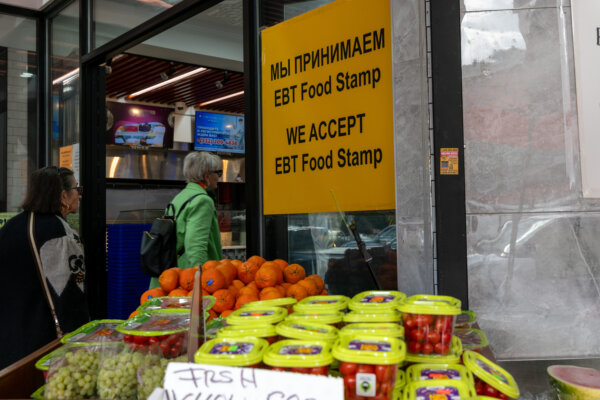
 The federal food stamp program was suspended starting Nov. 1, as the program ran out of congressional allocations amid the government shutdown—although at least some participants may soon receive their normal benefits.
The Supplemental Nutrition Assistance Program (SNAP) provides an average of $187.20 per month to its approximately 42 million low-income participants, according to data from the U.S. Department of Agriculture, which runs the program with state officials.
Funding for the government is stalled since the government shut down on Oct. 1. Democrats have voted against reopening the government more than a dozen times, while Republicans blocked a bill that would fund SNAP while the parties work to resolve other funding decisions.
“Millions of Americans, as of tomorrow, will no longer receive SNAP,” USDA Secretary Brooke Rollins told a briefing in Washington on Oct. 31.
Some people may receive their normal benefits for November, however, even if they are delayed.
The federal government pays $9 billion a month for the program, so the contingency funds will not fully cover November benefits.
“Today’s ruling is a lifeline for millions of families, seniors, and veterans who depend on SNAP to put food on the table,” Baltimore, Maryland officials and other plaintiffs said in a joint statement.
In a ruling in a separate case, U.S. District Judge Indira Talwani said that the statutory scheme authorizing SNAP “does not contemplate an outright suspension of the program while some funds are available.” Instead, the government shall direct states to reduce funding for SNAP in that event, she said.
Talwani declined to order the government to use the contingency money, but directed officials to tell her by Nov. 4 whether they will use the money to fund reduced SNAP benefits or use additional funding to pay for November in full. McConnell directed officials to provide him an update on Monday.
The USDA did not respond to requests for comment on the rulings.
SNAP benefits are provided through accounts called EBTs. Beneficiaries spend the food stamps with EBT cards, which are plastic, appear similar to debit and credit cards, and draw from the accounts. The benefits are provided on a certain day each month.
States Take Action
One of the lawsuits was filed by 25 states and the District of Columbia, asserting that the government could not pause SNAP when it could use the $5 billion, and revenue from tariffs, to fund it.
States had also been committing their own money ahead of the suspension.
“We must ensure our most vulnerable Virginians are not without basic nutrition,” Virginia Gov. Glenn Youngkin said in a statement.
Others have pledged funding to food banks and other alternative sources of food, including New York, which typically receives about $650 million a month for SNAP and has nearly three million residents participating in the program.
Some $106 million in new funding will provide more than 56 million meals, New York Gov. Kathy Hochul told reporters in Albany on Thursday.
Many governors have also urged individuals to donate to help nonprofits deal with the expected surge in needy people.