America-Israel’s Operation Epic Fury entered its 12th day, with U.S. Defense Secretary Pete Hegseth indicating that the most intense phase of U.S. strikes is expected on Wednesday. Tehran responded with retaliatory strikes against Gulf neighbors, as Goldman’s foreign affairs chief warned of a growing risk of regional spillover (read here). Overnight, market attention centered on energy, with the IEA reportedly proposing its largest-ever emergency crude release to combat Brent and WTI prices, which have reached triple-digit territory.
“The most fighters, the most bombers, the most strikes. Intelligence more refined and better than ever. So that’s on one hand,” Hegseth said. “On the other hand, the last 24 hours have seen Iran fire the lowest number of missiles they’ve been capable of firing yet.”
Around 0900 ET, the IEA is expected to announce plans for a massive crude release into the market to cap Brent and WTI prices, which surged near $120 per barrel at the start of the week. In a note to premium subscribers, we outlined several problems that could arise and why any such release would only offer temporary relief.
Read the note:
Beyond the panic among G-7 leaders and the IEA over crude prices, the Trump administration has also pushed its own headlines on Tuesday in an effort to jawbone energy prices lower, as we explained here.
Jawboning headlines from G-7 and the Trump administration on Tuesday were shortly followed by headlines that Iran had begun mining the Strait of Hormuz. That came after President Trump warned Tehran not to “put out any mines” in the narrow waterway. Shortly afterward, the U.S. military said 16 Iranian mine-laying naval vessels had been eliminated.
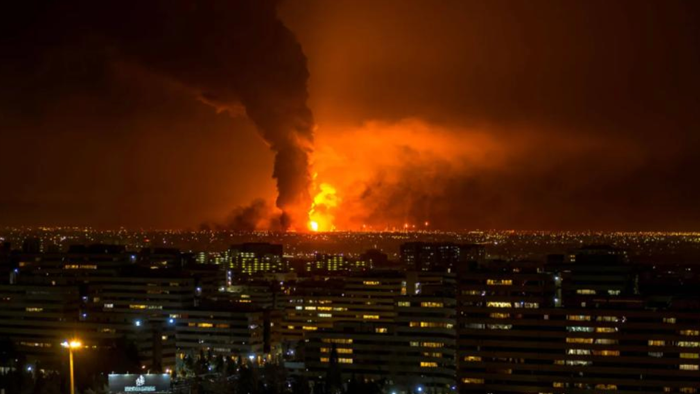
Overnight reports described heavy U.S. and Israeli strikes on IRGC targets, with damage reported to oil facilities, civilian sites, and a hospital in Bushehr taken out of service. Iran has claimed that nearly 10,000 sites have been hit overall.
There are currently no signs of de-escalation from either side, with IRGC spokesman Ebrahim Zolfighari warning the Trump administration at the start of the week: “If they can afford the price of oil at $200 per barrel, let them keep playing this game.”
The latest casualty report states that more than 1,200 people have been killed by U.S. and Israeli strikes in Iran, according to the Iranian Red Crescent Society, and 13 have died in Israel as Iran retaliated with missiles and drones.
Chief Pentagon spokesperson Sean Parnell said that 140 U.S. service members have been wounded in the conflict so far.
“The vast majority of these injuries have been minor, and 108 service members have already returned to duty,” Parnell said. “Eight service members remain listed as severely injured and are receiving the highest level of medical care.”
The latest and most critical overnight headlines (courtesy of Bloomberg):
Military Attacks
The US and Israel are conducting strikes against Iran, hitting thousands of targets across the country and degrading missile launchers and command networks
B-52 bombers have been used to strike Iranian ballistic missile and command-and-control sites
More than 1,000 civilians have been killed according to a preliminary count by Human Rights Activists News Agency
Israel struck Iranian drone launch squads, though the White House cannot confirm reports of 150 US troops injured
A drone strike in Iraq’s Kurdistan region killed a member of an Iranian Kurdish armed opposition group, with the group blaming Iran for the attack
Regional Impact
The UAE’s air defenses are intercepting missile and drone attacks from Iran, with loud bangs heard in Dubai
Two drones fell near Dubai International Airport, injuring four people including two Ghanaian nationals and one Bangladeshi national
Turkish President Erdogan warned the war must be stopped before it engulfs the region in flames
The UAE President wrote a patriotic poem performed by the national orchestra honoring those protecting the nation
Energy Market
The International Energy Agency is considering releasing emergency oil reserves of 300-400 million barrels, potentially the largest in its history
The IEA is recommending a release of oil from strategic reserves exceeding 100 million barrels over the first month, according to sources
Brent crude futures rose 5% to $92.47 a barrel while West Texas Intermediate climbed 5.8% to $88.27 early Wednesday
Wood Mackenzie consultancy warns of oil prices potentially reaching $150+ per barrel due to the supply shock
Brent crude briefly surged to $119.5 per barrel late Sunday in one of the most dramatic spikes in recent oil-market history
Strait of Hormuz
President Trump threatened Iran in a Truth Social post with “military consequences” at a level “never seen before” if they were to place mines in the Strait.
Iran unleashes naval mines across the critical waterway, followed by US military announcing 16 IRGC mine-laying ships in the area were “eliminated”
Reuters says the US naval fleet is not ready for convoys through Strait
US Secretary Wright deleted the tweet on US Navy escorted oil tanker through Strait – WH says premature
IRGC Commander slams Wright for fake news
Three vessels hit by projectiles in Strait of Hormuz
Diplomatic Developments
Russia is constantly in touch with Iranian leadership and willing to contribute to efforts to stabilize the region, according to the Kremlin
Russian media argues that negotiations with the US always end with missiles hitting capitals, questioning Trump’s peace deal efforts
President Trump warned Iran against laying mines in the Strait of Hormuz, threatening military consequences at a level never seen before
Top energy stories by outlet:
-
Pipelines by-passing Strait of Hormuz (WSJ)
-
IEA proposes record release from strategic oil reserves (WSJ)
-
IEA proposes release of 300-400 million barrels (Bloomberg)
-
United States not ready for convoys through Strait (Reuters)
-
China’s oil refiners relatively insulated from war (Bloomberg)
-
Qatar’s LNG shutdown tightens global gas supply (Bloomberg)
-
UAE shuts down refinery after damage from drone (Reuters)
-
ADNOC presses oil partners to transit the Strait (Bloomberg)
-
Pakistan reiterates support for Saudi Arabia (Bloomberg)
-
U.S. diesel prices in record weekly increase (WSJ)
-
Iran war and shadowy short wave broadcasts (FT)
-
Europe’s shift from nuclear was “strategic mistake” (Reuters)
Polymarket odds for a US-Iran ceasefire are sliding:
Commenting on energy markets, UBS analyst Nana Antiedu cited Henri Patricot’s note on three scenarios in the conflict and potential oil/gas implications:
If there is a quick de-escalation of the US-Iran conflict by mid-March with no damage to critical oil infrastructure and flows via Hormuz resume, Henri Patricot sees Brent averaging $80/bbl in March, before dropping to the mid-$70s.
TTF gas prices would hold €50/MWh, before falling to the high-€30s in 2Q26. In the case where Hormuz disruptions persist for a month, both oil and gas markets would further tighten, increasing the pace of inventory drawdowns and supply shut from GCC countries.
Here, he expects oil prices to rise above $100/bbl in the second half of March, averaging $100/bbl in March and $78/bbl for 1Q26, before coming down to $90/bbl in 2Q26 as disruptions ease.
For gas, LNG supply would be reduced for longer, requiring more demand reduction, especially as spare capacity and storage are limited.
He would expect TTF to rise towards €80/MWh by end-March, averaging €65/MWh in March and €46/bbl for 1Q26, before coming down to €50/MWh in 2Q26.
In the final scenario, where there is extended disruption (longer than a month), Brent prices could average $110/bbl in March and might climb towards $150+ by 2Q26. On the gas side, TTF could average €73/MWh in March and rise to €80/MWh in 2Q26.
What’s clear is that the Middle East conflict has sent macroeconomic uncertainty soaring across the world, despite the White House saying the surge in energy prices is temporary.
The big headline this morning will be around 0900 ET from the IEA on crude inventory releases.