You heard it in 1984 when it was featured at the Republican National Convention. You heard it at rallies for 1988 presidential candidate George H.W. Bush. You heard it on the radio during the Gulf War in the 1990s and featured on “American Idol” in 2003 and “Dancing With the Stars” in 2011.
You heard Dolly Parton sing it and Beyoncé cover it. In 2024, you heard it as Donald J. Trump entered the arena at the Republican National Convention.
And, if you missed all that, you probably heard the man who wrote it singing it on one of the 2 million disc and digital download copies the song has sold.
The song, of course, is “God Bless the U.S.A.,” aka “Proud to Be an American.” The man who wrote it, and who continues to sing it at age 83 on tour after grueling tour, is Lee Greenwood.
Greenwood calls it “the song I always felt the need to write.” It sends a clear message: In the United States, you are free, so do something about it.
“Freedom is what it’s about, and that means the right to strike out in new directions, to play against the odds,” Greenwood said in a phone interview.
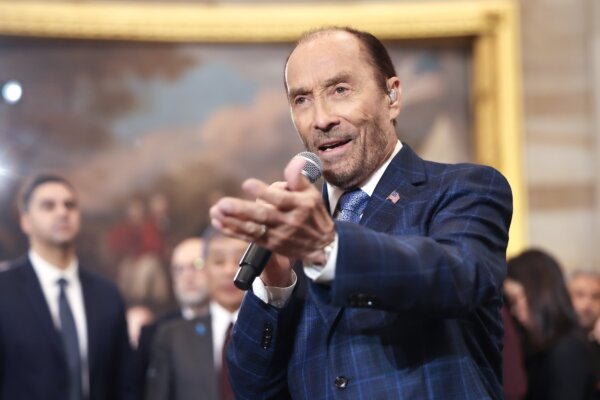
Greenwood performs during the inauguration concert at the Lincoln Memorial in Washington on Jan. 19, 2017. Aaron P. Bernstein/Stringer/ Getty Images
The year was 1983, and Korean Air Lines Flight 007 had just been shot down by Soviet interceptor aircraft, ending the lives of 269 people, including Congressman Larry McDonald. Cold War tensions, which had relaxed during the early years of President Reagan’s administration, flared up again.
Greenwood, then 40, had wanted to write an anthem since being inspired by Elvis Presley’s “An American Trilogy,” a rousing medley of “Dixie,” “The Battle Hymn of the Republic,” and a Bahamian folk song, “All My Trials.” The time seemed ripe, Greenwood thought, to write a song “to unite Americans.”
“I wrote it in the back of a tour bus with my keyboard on my lap and the headphones plugged in. It took about an hour, except for the second verse with the cities.” The cities were added later, with the intention of representing four different areas of the country: New York, Los Angeles, Detroit, Houston.
The opening lines announce the theme:
If tomorrow all the things were gone I’d worked for all my life And I had to start again With just my children and my wife I’d thank my lucky stars To be living here today ’Cause the flag still stands for freedom And they can’t take that away
The words come from Greenwood’s own experience. He knows personally about starting over, having gone through a range of roles in more than 20 years in the music business. He’s been a songwriter, an arranger, an opening act, and a recording artist. Prior to that, he held down a variety of jobs and trained as an athlete, first in his native Sacramento, California, and later in Los Angeles.
“I developed in music and baseball at the same time. But when I realized I was too small to play professional baseball, I formed my own band at 17,” Greenwood recalled. He made a choice, the kind of choice extolled in the first verse of his song.
While this verse of “God Bless the U.S.A.” states the need for freedom, the unforgettable chorus celebrates the country that makes freedom possible:
And I’m proud to be an American Where at least I know I’m free And I won’t forget the men who died Who gave that right to me And I’d gladly stand up Next to you and defend her still today ’Cause there ain’t no doubt I love this land God bless the USA
The second verse presents an American geography lesson, and then the chorus returns in all its anticipated glory.
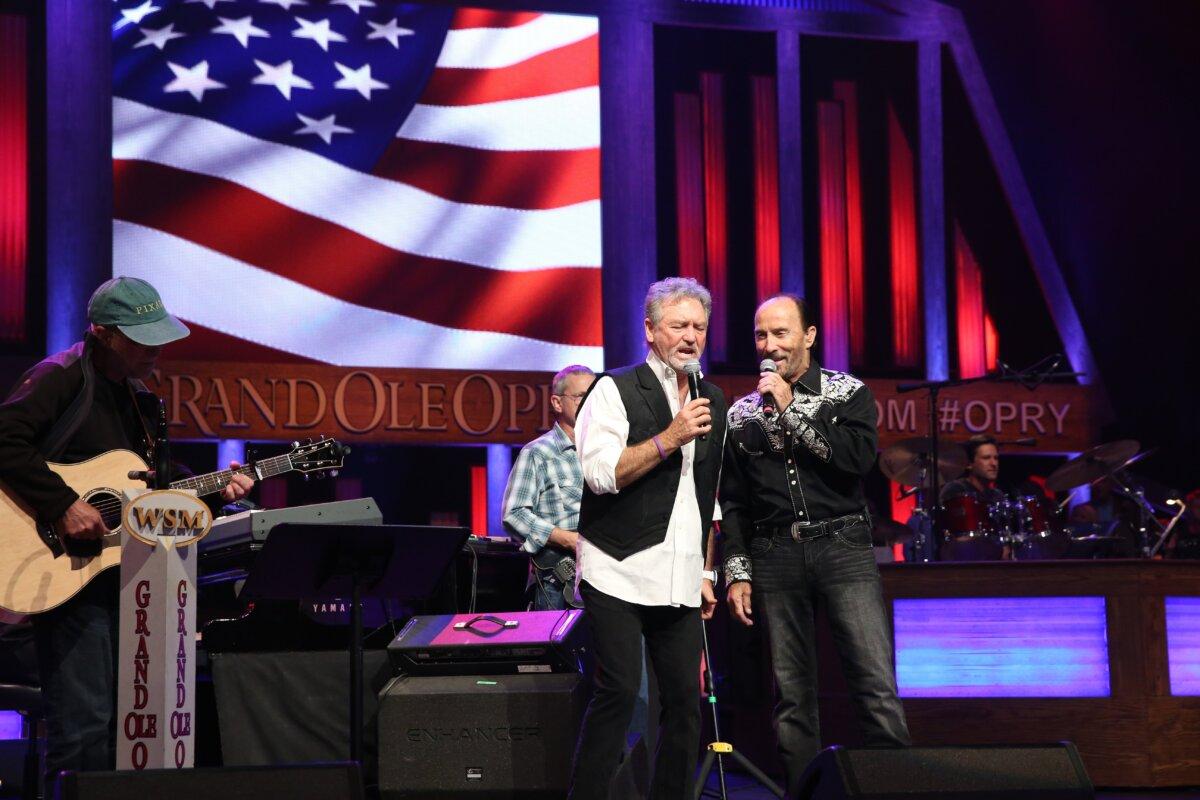
Singer Larry Gatlin (L) and Greenwood perform at the Grand Ole Opry House in Nashville, Tenn., on June 27, 2014. Terry Wyatt/Stringer/ Getty Images
The song was released in May 1984 and peaked at only No. 7 on Billboard’s Hot Country Singles. But when the Republican National Convention picked it up that summer, “God Bless the U.S.A.” started its ascent to anthem status, eventually becoming the contemporary equal of the mid-20th century’s “God Bless America.”
“God Bless the U.S.A.” reentered the Billboard charts twice, first in 2001 in both the country and adult contemporary categories, then again in 2020, when it reached No. 1 in digital song sales across genres.
While the song’s genre is definitely country, its singer-songwriter’s provenance is not. When “God Bless the U.S.A.” was released, Greenwood had been a country artist for only five years. He’d spent most of the previous two decades in jazz and pop. The pop band he formed around age 20 featured him on the saxophone.
The piano was Greenwood’s first instrument, which he learned at age 7. His second was the saxophone, at age 12. He never learned the guitar, saying, “My fingers were too small for the guitar. It was difficult to bar the chords.”
If you were in Las Vegas between 1970 and 1979, you might have run across Lee Greenwood dealing cards or performing as a lounge pianist and singer at any number of casino-hotels. He also made orchestrations and started to write songs. It was all piecework, and not terribly satisfying, even though he crossed paths with some of the biggest stars of the time, including Elvis Presley.
Finally, at age 37, he’d had enough: “I grabbed that brass ring and went to Nashville in 1979. I signed with an agency and as a writer at MCA Records in 1981.”
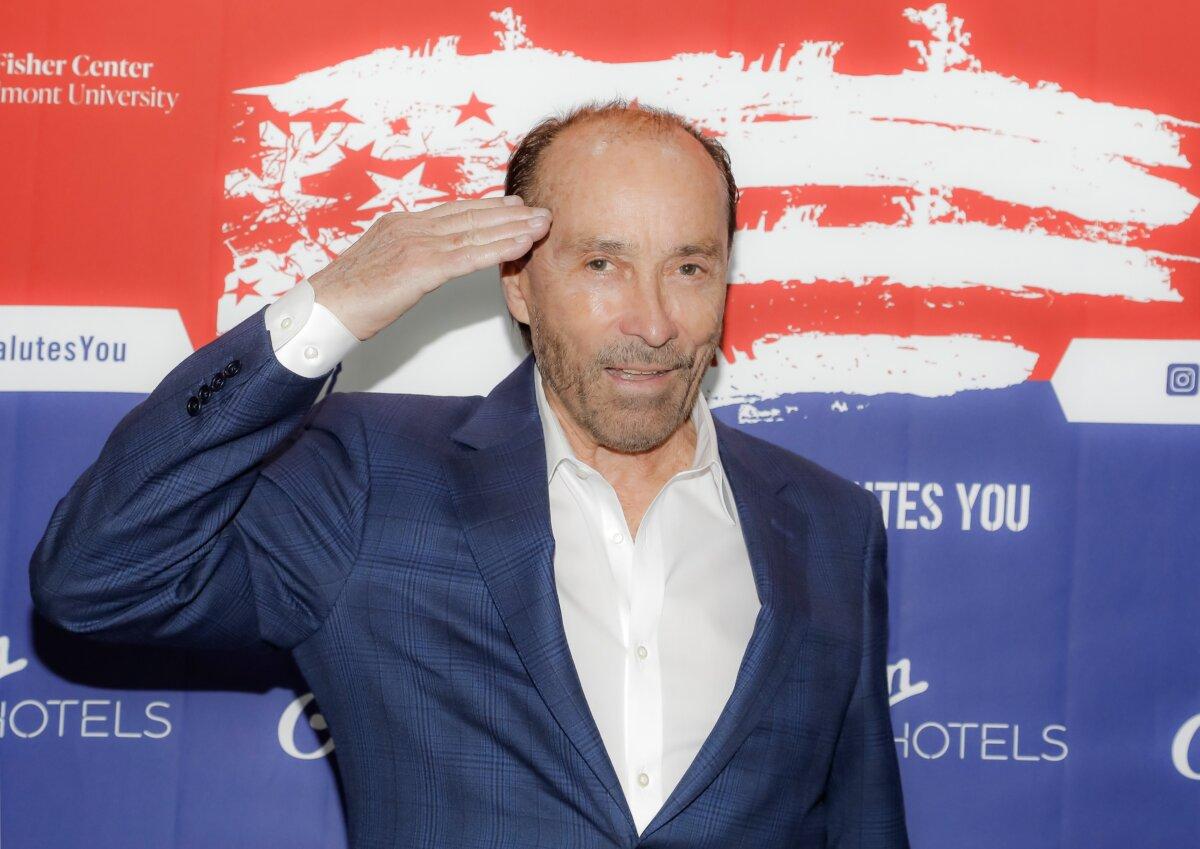
Greenwood attends the “America Salutes You” concert at The Fisher Center for the Performing Arts in Nashville, Tenn., in December 2023. Tibrina Hobson/Stringer/Getty Images
His first successes were as a writer, penning, for example, “A Love Song” for Kenny Rogers. Ironically, when he went on to succeed as a singer, all his No. 1 Billboard Hot Country hits were written by other people: “Somebody’s Gonna Love You,” “Going, Going, Gone,” “Dixie Road,” “I Don’t Mind the Thorns (If You’re the Rose),” “Don’t Underestimate My Love for You,” “Hearts Aren’t Made to Break (They’re Made to Love),” and “Mornin’ Ride.”
It was a long climb into the charts. Said Greenwood:
“I won’t downplay how hard it is to go from the lounge of the Frontier Hotel in Vegas to the soundstages of Nashville. To tell the truth, I expected success a lot sooner. But as my mother said, it’s not talent, it’s persistence that makes success.”
At 83, Greenwood looks 60, a phenomenon he credits to playing pickup basketball daily. He is married to the former Miss Tennessee USA Kimberly Payne. They have two sons, Dalton and Parker. Greenwood was named by President George W. Bush to the National Council on the Arts, where he remained until 2021. President Trump appointed Greenwood to the Kennedy Center Board of Trustees, on which he currently serves.
As a pianist, Greenwood said, he composes differently from if he were a guitarist.
“I love the saxophone and the piano. Both serve me well and help me create melodies that move around.”
Case in point: “God Bless the U.S.A.” The first 10 syllables of the chorus traverse a complete octave upward, easy jumps on the sax or the piano, but not so easy on the guitar. The rest of the song also involves distances between notes that aren’t typical of the guitar.
What if the bottom fell out of the country music market and, just hypothetically, Greenwood had to start over “with just his children and his wife”? What would he do?

 You’ve heard it your entire life.