OAN Staff Brooke Mallory
4:52 PM – Monday, March 9, 2026
As the Middle East grapples with the aftermath of Ayatollah Ali Khamenei’s death, a new and chilling intelligence warning has emerged. U.S. officials are sounding the alarm over what appears to be an “operational trigger” sent by Tehran to activate sleeper cells across the globe.
Federal law enforcement agencies have been placed on high alert following the purported interception of a “sophisticated, encrypted transmission” originating from Iran.
According to intelligence reports, the signal — detected shortly after the February 28th elimination of Supreme Leader Ali Khamenei — is believed to be a “go-order” for prepositioned sleeper assets and covert operatives operating in the West.
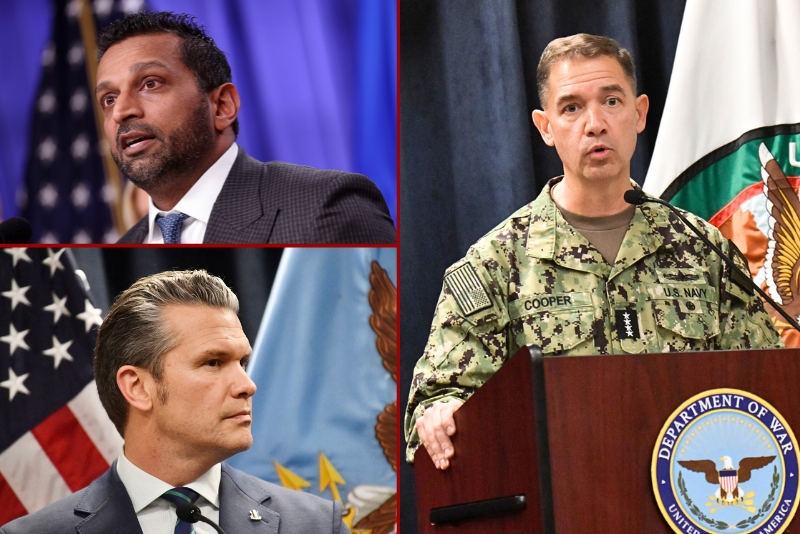
During a Pentagon briefing on March 2nd, Secretary of War Pete Hegseth told reporters that the U.S. is “ready” for Iranian sleeper cell attacks on U.S. soil. He described the Iranian government as a “regime that seeks to export that ideology, to try and sow terror.”
In more recent updates, Hegseth also emphasized that while the U.S. is aggressively striking targets inside Iran — including over 200 strikes on command centers and military infrastructure — the administration is prioritizing “maximum possible force protection” at home.
What is a Sleeper Cell?
At its core, a sleeper cell is a group of trained operatives, often belonging to a terrorist organization or a foreign intelligence agency, who infiltrate a target country and remain “dormant” for an extended period.
Unlike active strike teams that move in and out of a region quickly, members of a sleeper cell are designed to blend into the local population until they receive a specific “trigger” or order to act.
“The Iranian regime has spent decades building ‘contingency’ networks in Europe and the Americas,” says Jason Brodsky, policy director for United Against Nuclear Iran (UANI). “These aren’t just for spying; they are for asymmetric payback. With the head of the snake gone, they are looking to strike back where it hurts most: the Western homeland.”
Nature of the Signal
U.S. signals intelligence (SIGINT) indicates the message was not sent via traditional internet or cellular networks, which are easily monitored. Instead, it was broadcast via a high-powered, shortwave-style transmission designed for recipients “possessing a specific physical encryption key.”
Experts have confirmed that a new Farsi-language “numbers station,” designated V32 by monitoring groups like ENIGMA 2000, began broadcasting on the frequency of 7910 kHz shortly after the strikes. This is a high-powered shortwave signal that uses the ionosphere to “bounce” around the globe, making it accessible to anyone with a basic shortwave receiver.
While the exact “message” or signal remains un-deciphered, analysts describe its “international rebroadcast characteristics” as consistent with historical “one-way voice link” (OWVL) protocols used to activate foreign operatives.
The transmission was relayed across multiple continents, suggesting a global call to action, officials added.
On February 28th, a joint U.S.-Israeli operation, Operation Epic Fury, struck a high-level leadership meeting in Tehran. The strike killed 86-year-old Ayatollah Ali Khamenei, his daughter, several grandchildren, and many more of his relatives, along with top military commanders. Iran has now officially named Khamenei’s son, Mojtaba Khamenei, as the new supreme leader, signaling a hardline continuation of the regime.
Military Retaliation
Since the conflict began, the IRGC has been executing “Operation True Promise 4,” a campaign of missile and drone strikes, now entering its 28th wave, that has significantly destabilized regional security. It is verified that Iran has targeted at least 14 locations where U.S. and allied forces are stationed, including major hubs like Al-Udeid (Qatar), Al-Dhafra (UAE), and the 5th Fleet headquarters in Bahrain.
Global oil prices have spiked, with Brent crude oil hitting an intraday high of $119.50 a barrel this morning. While prices have since fluctuated due to G7 intervention, the threat to the Strait of Hormuz has created an “effective closure” where commercial shipping has halted due to extreme risk and the withdrawal of war-risk insurance.
Since February 28th, seven American servicemembers have perished. On Monday, the Pentagon formally identified the seventh fallen servicemember as Sgt. Benjamin N. Pennington, 26, of Glendale, Kentucky.
Domestic Unrest
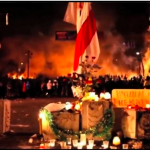
While state-mandated mourning is underway in Iran, reports have surfaced of many Iranian citizens celebrating the dictator’s end, leading to violent crackdowns by security forces.
The Iranian government has officially declared a 40-day period of national mourning and seven public holidays following the death of Ali Khamenei. Meanwhile, Iranian State media has, unsurprisingly, focused exclusively on images of grief, showing large crowds in Tehran’s Enghelab Square pledging allegiance to the newly appointed successor, Mojtaba Khamenei.
However, these reports of national unity are sharply contradicted by verified videos and eyewitness accounts from across the country. In cities like Karaj, Dehloran, and southern Tehran, many citizens have been seen celebrating in the streets, setting off fireworks, honking horns and playing music.
In response to these celebrations, the regime has intensified its violent crackdowns, utilizing the Basij militia and IRGC security forces to suppress any sign of joy. Reports from human rights organizations and residents indicate that security forces have fired live ammunition at the windows of homes where anti-regime slogans were shouted and have conducted sweeping “door-to-door” arrests.
The atmosphere is further strained by the regime’s decision to postpone the state funeral, officially citing “expected turnout” while independent analysts suggest the delay is due to fears that the gathering would be targeted by ongoing U.S.-Israeli airstrikes or turn into a massive anti-government riot.
As a result, the country remains deeply polarized. while one segment of the population participates in state-mandated mourning, fearful of government persecution, the other faces lethal force for celebrating a “Berlin Wall moment,” as described by analysts, for the Islamic Republic.
Homeland Security: Lone Wolves and Coordinated Cells
U.S. officials are investigating whether the “trigger” has already inspired kinetic action on American soil. Two specific incidents are under scrutiny for a “terrorism nexus”:
*Federal authorities advise the public to remain vigilant but emphasize there is currently no “specific, credible threat” tied to a particular location.*
Stay informed! Receive breaking news blasts directly to your inbox for free. Subscribe here. https://www.oann.com/alerts
What do YOU think? Click here to jump to the comments!
Sponsored Content Below