
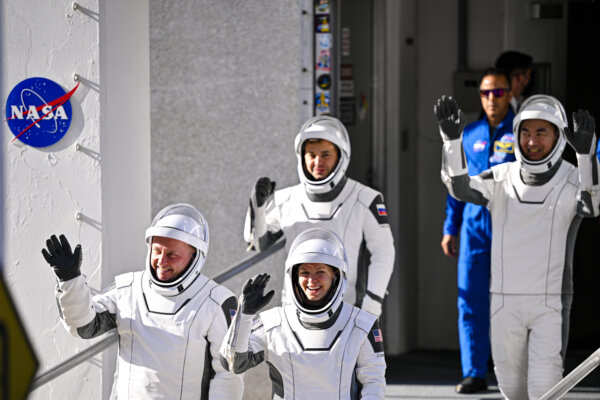
 One of the astronauts aboard the International Space Station (ISS) suffered what NASA Administrator Jared Isaacman described as a serious medical condition on Jan. 7, triggering the first medical evacuation in the orbiting laboratory’s 25-year history.
That astronaut, and his or her condition, remains anonymous due to medical privacy. However, it appears to be one of a four-person crew who flew aboard the SpaceX Crew Dragon Endeavor in August 2025.
Speaking at a press conference on Jan. 8, Isaacman confirmed that work would begin to bring NASA Astronauts Zena Cardman (mission commander) and Mike Fincke (mission pilot), as well as Russian Cosmonaut Oleg Platonov of Roscosmos and Kimiya Yui of the Japan Aerospace Exploration Agency (JAXA), back home earlier than expected.
Cardman and Fincke were preparing to conduct a 6.5-hour spacewalk on Jan. 8 as part of their larger Expedition 74 mission aboard the floating laboratory when one of the seven astronauts aboard the ISS suffered a medical incident.
Isaacman was joined by Dr. James Polk, chief health and medical officer for NASA, who clarified that the medical incident had nothing to do with spacewalk preparations or any other ongoing operation.
“This actually had nothing to do with the operational environment and preparing for a spacewalk at all,” he said. “This was totally unrelated to any operations on board.”
The ISS houses a vast suite of medical equipment which has been used to treat astronauts for various issues over the years, but Polk explained that while the equipment in orbit was enough to stabilize the astronaut, it was insufficient to treat the matter fully.
“We don’t have the complete amount of hardware that I would have in the emergency department, for example, to complete a workup of a patient,” he explained. “And in this particular incident, the medical incident was sufficient enough that we were concerned about the astronaut, that we would like to complete that workup, and the best way to complete that workup is on the ground, where we have the full suite of medical testing hardware.”
Isaacman said that with the combination of the medical equipment, the training the astronauts receive beforehand, and NASA’s pack of flight surgeons on the ground, the astronaut’s stabilization and the decision to bring the crew home early would have remained the same.
That being said, officials are not declaring the early departure as an emergency evacuation. They argued the decision was made out of an abundance of caution for the astronaut, who Polk emphasized was completely stabilized, and that standard reentry procedures are already prepared for various medical contingencies that can occur as the crew is brought aboard the recovery ship.
Crew-11 was scheduled to stay aboard the station for at least six months. They have less than a month left in their original mission time, and they have been able to complete nearly all of their objectives.