 A COVID-19 variant reported in more than two dozen other countries has been found in the United States, the Centers for Disease Control and Prevention said in a recent report.
The variant, BA.3.2, was found in a sample in November 2024 in South Africa, according to the CDC. As of Feb. 11, 2026, it has been found in 23 countries, and it’s now been detected in more than 140 samples that were collected in the United States and are present in 25 states, the agency said.
“BA.3.2 was detected in nasal swabs from four travelers, three airplane wastewater samples, clinical samples from five patients, and 132 wastewater samples from 25 U.S. states,” the CDC said in the report, dated March 19.
The variant differs from COVID-19 JN.1 strains, including LP.8.1 and XFG, that have been circulating in the United States since January 2024, according to the CDC.
The CDC said travelers returning from Japan, Kenya, the Netherlands, and the United Kingdom were infected with the COVID-19 variant, and that between November and December last year, weekly BA.3.2 detections reached around 30 percent of sequences in the Netherlands, Germany, and Denmark.
As of March 13, a CDC website that tracks COVID-19 variants shows that the BA.3.2 strain was not listed. The most detected variants include multiple XFG strains and the XFY variant.
Lab studies suggested that the BA.3.2 variant can evade the body’s protective antibodies for COVID-19, according to the CDC, likely due to “spike protein mutations, highlighting the need for ongoing genomic surveillance and observational evaluations of vaccine and antiviral effectiveness.”
“Although widespread infection- and vaccine-conferred immunity have decreased rates of severe COVID-19 over time, the public health impact of COVID-19 is still considerable,” the March 19 report added, saying between 390,000 and 550,000 hospitalizations and between 45,000 and 64,000 estimated deaths for the virus occurred in the 2024–2025 respiratory virus season.
Any new COVID-19 variants that display “substantial capacity to evade immunity from previous infections or vaccines could be associated with seasonal increases in COVID-19 activity,” said the CDC, adding that surveillance data will guide the health agency’s responses, preparedness, and decision-making around vaccine boosters.
But the CDC cautioned that it’s currently unclear whether BA.3.2 can cause more severe illness or have a more significant impact on the U.S. health care system. Furthermore, the agency said there are “at least five limitations” with the report’s findings, including variations in international reporting capacity on COVID-19, the timing of sample collection, and other obstacles.
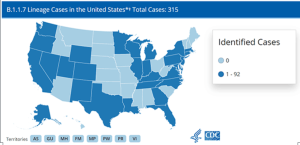
States where the variant has been detected, according to the CDC, include California, Connecticut, Florida, Hawaii, Idaho, Illinois, Maine, Maryland, Massachusetts, Michigan, Missouri, New Hampshire, New Jersey, New York, Nevada, Ohio, Pennsylvania, Rhode Island, South Carolina, Texas, Utah, Vermont, Virginia, and Wyoming.
Last week, the CDC said that the number of respiratory illness cases that are causing people to seek health care was rated as “low,” which is the second-lowest out of a five-tier rating system.
“COVID-19 activity is decreasing in most areas of the country” as of March 20, the agency said, also reporting that levels of the virus are rated as “low” and hospitalizations are considered “very low.” Influenza activity is also considered “low,” and respiratory syncytial virus, also known as RSV, is considered “moderate” but on the decline, it stated.