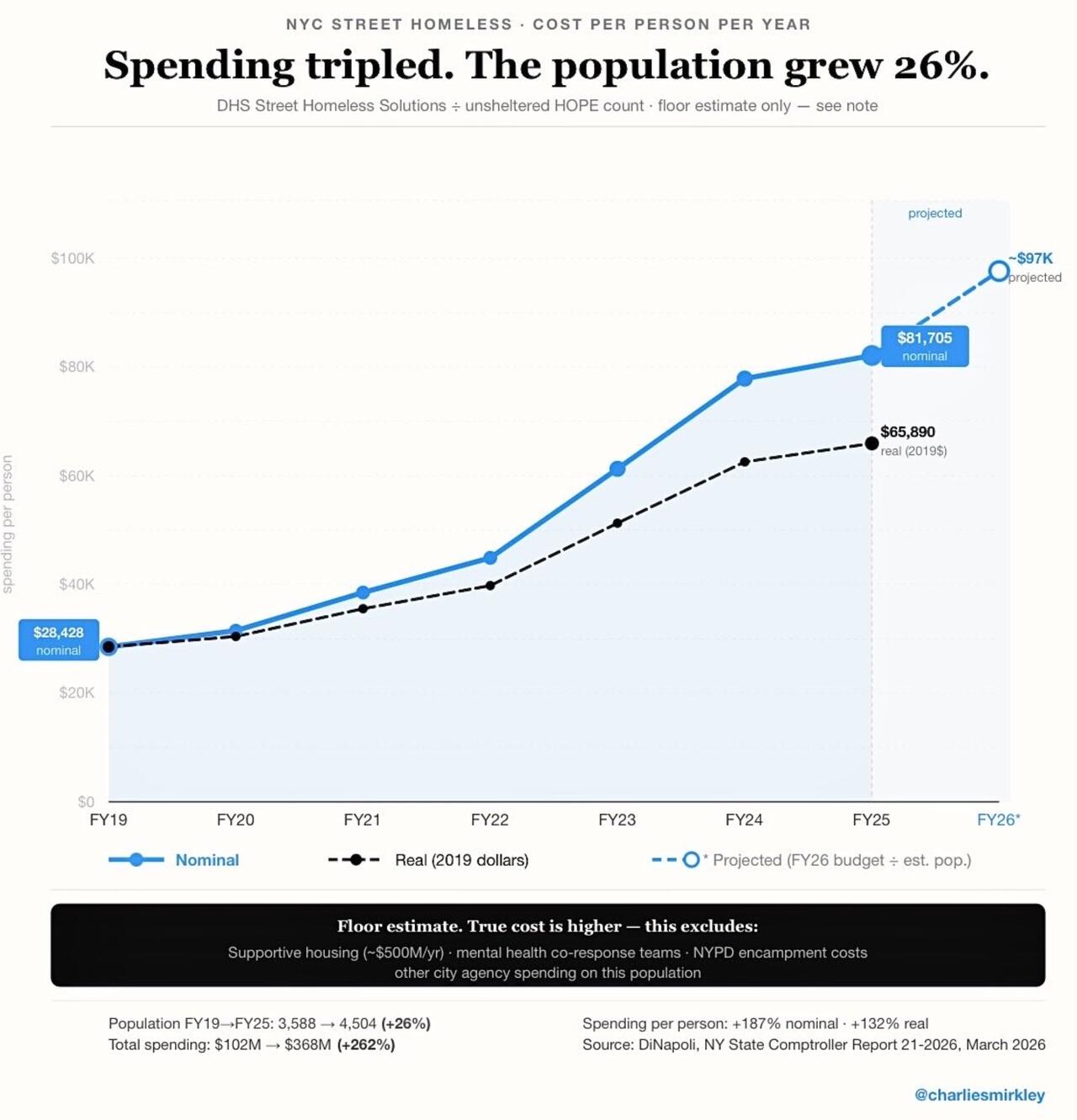
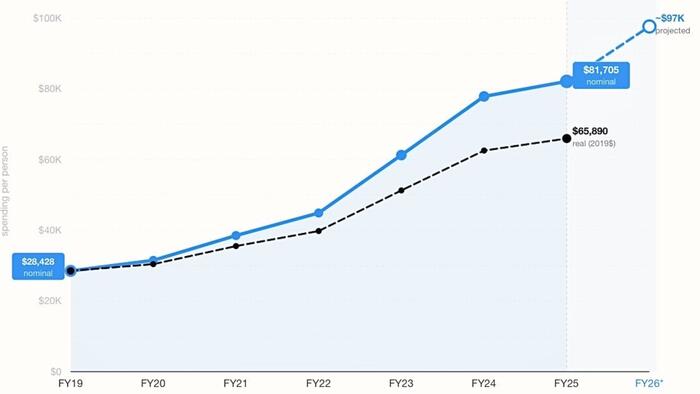
New York City spent about $368 million last year on services for people living on the streets, which equals roughly $81,000 per unsheltered person, according to the NY Post.
Spending through the city’s New York City Department of Homeless Services street outreach programs has increased sharply over the past several years. In 2019, the city spent about $102 million on these services, averaging around $28,000 per unsheltered individual. By the 2025 fiscal year, the average cost had risen to about $81,000 per person, close to the city’s median household income of $81,228.
Unsheltered homeless individuals are those who regularly live outside rather than in shelters or permanent housing. During this same period, the number of people living on the streets grew by 26 percent, rising from 3,588 in 2019 to 4,505 in 2025. However, spending increased far faster than the population itself.
The NY Post writes that the rise in street homelessness has been linked partly to the COVID-19 pandemic and increased migration. Still, the report noted that the reasons spending rose so quickly are not fully clear. One possible factor is the expansion of low-barrier shelters and drop-in centers that provide services such as meals, showers, and temporary sleeping spaces, allowing people to come and go freely. Financial records do not clearly separate how much funding goes to these specific programs.
The report says the city should examine more closely how these funds are being used and whether the programs are successfully moving people into shelters or permanent housing. Spending on street homelessness programs is expected to increase further, reaching about $456 million by fiscal year 2026.
Overall homelessness in New York City has also increased significantly. The city’s total homeless population is now around 140,000 people, about 78 percent higher than in 2019. Officials note that roughly 97 percent of homeless residents receive some type of shelter placement, although the number of people living outside continues to grow.
Some housing advocates argue that filling vacant public and supportive housing units could help move more people off the streets while reducing the high costs associated with short-term shelter programs.