
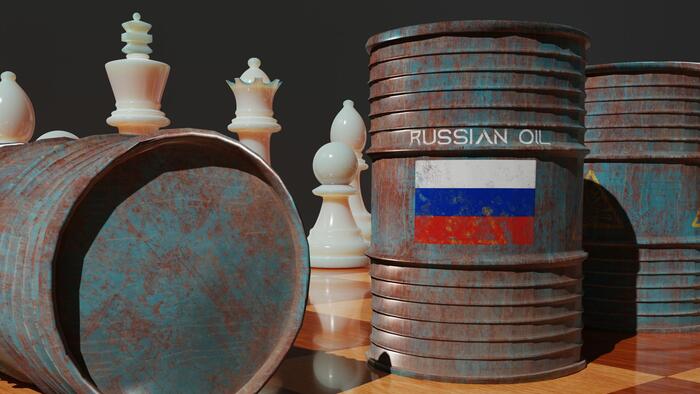
Global sanctions meet the digital age in a recent interesting bit of FT analysis, which concluded that a single email server may have exposed what amounts to a $90 billion shadow pipeline for Russian crude.
While Western media and officials would consider this an ‘illicit’ sprawling sanctions-evasion machine hiding in plain sight, Moscow sees US-EU efforts to stamp out its international energy trade as an unjust tactic to impose total economic isolation related to the Putin’s ‘special military operation’ in Ukraine.
The Financial Times report alleges that “48 seemingly independent companies working from different physical addresses” in reality appear to be “operating together to disguise the origin of Russian oil, particularly from Kremlin-controlled Rosneft.”
Discovery of a common backend infrastructure reportedly exposes the scheme, as on the surface it looked like a fragmented web of independent traders – while digitally, it was one ecosystem.
For example, the FT identified 442 web domains all routed through the same private server – “mx.phoenixtrading.ltd” – with 19 of those domains reportedly tied to Russian businesses, spanning energy and real estate ventures, and curiously several are linked to Azeri nationals.
Among the heavy hitters identified are Dubai-based Foxton FZCO, listed in Russian export records as purchasing $5.6 billion worth of oil – and Advan Alliance appears in Indian customs data as having sold $1.5 billion in Russian crude into India.
Investigators further found the companies had remarkably short lifespans, suggesting fraud, and in some cases customs records revealed the average entity operated for just six months.
The report alleges additionally that once sanctioned a firm would often vanish, only to be replaced by a fresh corporate shell – leaving oversight authorities and enforcement lagging far behind.
The report further highlights in the wake of Trump sanctioning export giants Rosneft and Lukoil back in October 2025:
Since those sanctions were imposed, an otherwise unknown company in the network, “Redwood Global Supply”, has become the single largest exporter of Russian crude. The companies are linked to a group of Azeri businessmen with strong ties to Rosneft.
Ukraine and EU officials are calling for greater efforts to bust up such deceptive digital networks in order to starve the Russian war machine financially.
“The frequent changes of names of ships, managers and oil marketing companies… are long-standing deceptive shipping practices designed to obfuscate the destination, origin and ownership of cargoes and their logistics,” Michelle Wiese Bockmann of maritime intelligence firm Windward told the FT.
Loading recommendations…