
OAN Staff Katherine Mosack and Brooke Mallory
3:49 PM – Thursday, March 12, 2026
The U.S. Senate passed the 21st Century ROAD to Housing Act on Thursday with an overwhelming bipartisan vote of 89–10. The legislation is being hailed as one of the most significant housing reform packages in decades, aiming to tackle the national housing shortage and rising costs.
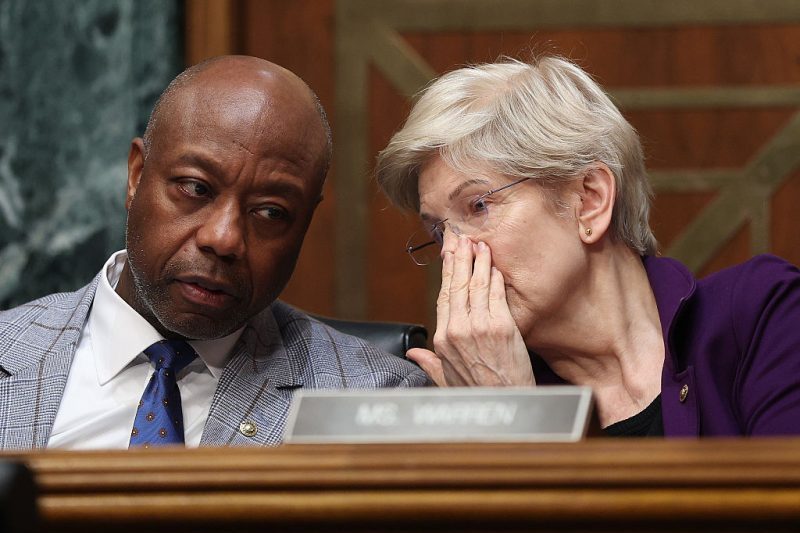
The 21st Century ROAD to Housing Act is a landmark bipartisan compromise co-authored by Senators Tim Scott (R-S.C.) and Elizabeth Warren (D-Mass.).
Ahead of this year’s midterm elections, the bill aims to tackle the national affordability crisis through a series of grants and pilot programs designed to spark new construction.
By revising federal definitions, the legislation seeks to encourage more diverse housing units while preventing large-scale investors from buying up single-family homes. It also targets “bureaucratic bottlenecks” at the Department of Housing and Urban Development (HUD), streamlining the inspection process by creating new ways for projects to satisfy federal requirements.
The package combines the House-passed “21st Century Act” with the “Renewing Opportunity in the American Dream (ROAD) to Housing Act,” which originally passed the Senate as an amendment to the National Defense Authorization Act for Fiscal Year 2026.
This final version incorporates several new sections to bridge the two proposals into a single comprehensive bill. Scott maintains that the legislation fulfills the Trump administration’s affordability agenda by cutting regulatory red tape and expanding the housing supply without generating any new federal spending.
“When President Trump and Elizabeth Warren and the Senate majority of Republicans can all come to the same place on a housing bill, what it says is you put partisan politics aside and you ask yourself, ‘What is one of the most profound issues impacting the American people?’” Scott told CNBC on Wednesday.
“It will mean, for the first time, that we’re moving housing prices in a better direction and beating private equity out of the system — making a very public statement that homes are for the families who live there, not for Wall Street investors who figured out another way to make a buck,” Warren told NBC News.
Those who voted against the bill were Senators Ted Budd (R-N.C.), Ted Cruz (R-Texas), Ron Johnson (R-Wis.), Mike Lee (R-Utah), Rand Paul (R-Ky.), Rick Scott (R-Fla.), Thom Tillis (R-N.C.), Tommy Tuberville (R-Ala.), Todd Young (R-Ind.), and Brian Schatz (D-Hawaii).
Preoccupied with her gubernatorial bid in Tennessee, Senator Marsha Blackburn (R-Tenn.) did not cast a vote on the housing package. Senator Raphael Warnock (D-Ga.) later referred to the bill as a “once-in-a-generation piece of housing legislation.”
“If I told you that Tim Scott and Elizabeth Warren walked into a bar, it sounds like the beginning of a bad joke,” he said. “But we got that through our committee. There’s overwhelming support in the Senate. We’re going to get this over the finish line.”
President Trump has already called for a ban on large investment firms buying up single-family homes, thereby reducing supply and hiking up costs for new home buyers. In January, Trump also signed the executive order “Stopping Wall Street from Competing with Main Street Homebuyers,” which directs federal agencies to stop financing or supporting corporate acquisitions.
Following the executive order, the Department of Justice (DOJ) and the Federal Trade Commission (FTC) have been directed to scrutinize large-scale residential acquisitions for monopolistic behavior and anticompetitive practices. This heightened oversight is designed to prevent corporate entities from cornering local markets, which artificially inflates prices and restricts the inventory available to first-time homebuyers.
Stay informed! Receive breaking news alerts directly to your inbox for free. Subscribe here. https://www.oann.com/alerts
What do YOU think? Click here to jump to the comments!
Sponsored Content Below