
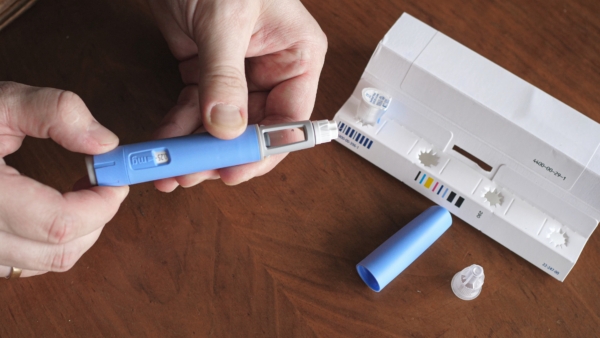
 A potential, although modest, increase in the risk of a rare eye condition that is sometimes called “eye stroke” was found in patients with Type 2 diabetes who use semaglutide, also used for weight loss, new research finds.
Sudden Vision Loss
The condition, called non-arteritic anterior ischemic optic neuropathy (NAION), occurs when blood flow to the optic nerve is blocked, potentially causing sudden vision loss, hence the term “eye stroke.”
Given the popularity of semaglutide medications, many researchers are studying their long-term effects.
Semaglutide is a glucagon-like peptide-1 receptor agonist (GLP-1RA), a drug class commonly used to help control blood sugar levels in people with Type 2 diabetes.
Some research suggests that rapid reductions in blood sugar levels induced by these medications might adversely affect the optic nerve’s blood supply, leading to NAION, Meenal Agarwal, who has a doctorate in optometry, told The Epoch Times.
“However, a direct causal link has not been definitively established, and further research is necessary to understand this relationship fully,” said Agarwal, who owns three vision clinics in Ontario.
The researchers analyzed data from 14 different databases, including medical claims and electronic health records, of more than 37 million adults with Type 2 diabetes. The findings showed the incidence rate of NAION was 14.5 per 100,000 semaglutide users.
Researchers used two different methods to analyze the data. One compared new semaglutide users to those taking other diabetes drugs. The other compared an individual’s risk of NAION during periods when they were taking semaglutide versus times when they were not.
Both methods found that semaglutide users had a higher risk of NAION.
No consistent risk was observed with dulaglutide, another GLP-1RA used to control Type 2 diabetes, although the authors note a small signal was detected with exenatide (Byetta).
Further Evidence Needed
The findings suggest “a modest increase in the risk of NAION among individuals with T2D associated with semaglutide use, smaller than that previously reported,” the study authors wrote, noting that this warrants further investigation into ophthalmic risk factors as well as the effects of different dosages.
Novo Nordisk’s Response
In an emailed statement, a spokesperson for drugmaker Novo Nordisk, which manufactures different semaglutide medications, told The Epoch Times that they had conducted an analysis across randomized controlled clinical trials with GLP-1 receptor agonist drugs that included a blinded ophthalmologist evaluation to confirm NAION diagnoses.
Through this analysis, the spokesperson said, very few ophthalmologist-confirmed NAION cases were found, “with no imbalance disfavoring Novo Nordisk GLP-1 receptor agonists.”
Agarwal emphasized that there are yet no definite answers about a direct causal link between semaglutide and NAION, “but educating our patients about possible ocular side effects of using GLP-1 receptor agonists is crucial.”
If patients experience any sudden changes in vision, typically without pain, while on these medications, she advised that they visit their eye doctor as soon as possible. “Early detection and management are vital to prevent potential long-term visual loss.”