
Authored by James Gorrie via The Epoch Times,
Since the end of the Bretton Woods system in 1971, the U.S. dollar has dominated global finance as the chief reserve currency. It’s used in international trade, sovereign lending, and central bank reserves.
This dominance allows the United States to borrow cheaply and wield great financial leverage globally.
Recent actions by the Trump administration, sometimes labeled a neo-Monroe Doctrine for its assertive posture toward perceived rivals, can be understood through the lens of preserving dollar supremacy against challenges from rising powers like China and Russia.
The Rise of De-dollarization
Though the dollar remains dominant, its grip has been weakening over decades. According to IMF and central bank data, the dollar’s share of global foreign-exchange reserves has fallen from over 70 percent in 2000 to under 60 percent in recent years; this reflects broader moves by countries to diversify away from U.S. currency dependence. At the same time, China’s share has increased substantially.
Meanwhile, states are increasingly engaging in de-dollarization, which means reducing the use of the dollar in international trade and reserves. This trend is driven in part by a desire to decrease exposure to U.S. monetary policy and sanctions, including increased tariffs and unilateral economic measures against trading partners and adversaries.
BRICS: Geopolitics, Gold, and a Potential Currency Challenge
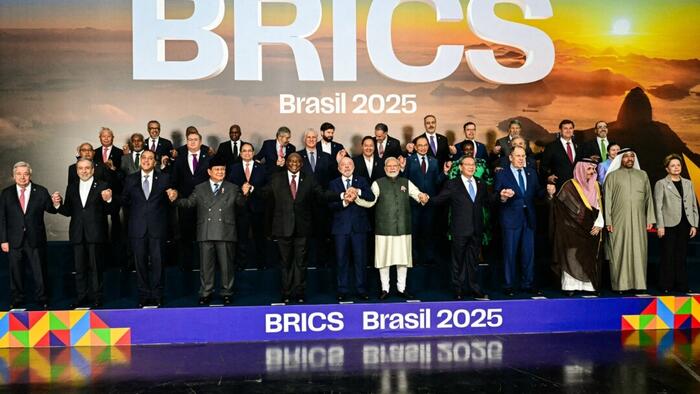
The group of emerging economies known as BRICS (Brazil, Russia, India, China, South Africa) has been the focal point of rivalry to dollar hegemony. At various summits, the idea of a BRICS currency or common alternative currency, which have included the notion of backing it with gold as a means of anchoring value and appealing to nations wary of fiat currencies that, by definition, have no gold backing their value, but rather, convention, oil trade flows, and the global economic and military dominance of the United States.
While Kremlin officials have denied any imminent creation of a unified currency to dethrone the dollar, proposals for trade in non-dollar currencies and discussion of alternative settlement systems persist. The historical context of the gold standard and its connection to confidence in currencies is a big part of these discussions.
Trump’s Neo-Monroe Doctrine: Tariffs as Dollar Defense
Since returning to office, President Donald Trump has made defense of the dollar a central part his foreign-economic policy. He has threatened 100 percent tariffs on BRICS nations or any country that backs a currency to replace the dollar in international trade. Clearly, the administration views dollar dominance as non-negotiable.
By linking trade access to acceptance of the dollar’s role, the administration is attempting to reinforce global reliance on U.S. currency for trade settlement and reserves. This strategy also links his broader tariffs and industrial policy agendas to maintaining dollar dominance in the world.
Dollar Supremacy, Oil, and US Strategic Power
The dollar’s special status has been reinforced historically by its role in oil markets known as the so-called petrodollar system. Because oil has been priced and traded primarily in dollars, global demand for U.S. currency has been supported by energy trade flows. The Trump administration’s recent strategic moves in oil-rich regions such as Venezuela have been interpreted by some analysts as efforts to bolster the petrodollar system and keep key energy resources within dollar-centric markets.
This makes sense from a currency preservation perspective. Although the United States has become a major producer and exporter of oil in its own right, efforts to maintain dollar pricing in energy markets remain crucial to preserving demand for the currency.
Trade, Savings, Innovation, and the Dollar’s Role
The dollar’s dominance provides huge benefits for the world as well as the United States. It reduces transaction costs for U.S. exporters and importers and reinforces the U.S. role in global value chains, but it also simplifies trade invoicing and settlement between other nations with less stable currencies. Its status as the primary reserve currency also underpins the liquidity and depth of U.S. capital markets, enabling inexpensive borrowing that fuels investment in technology and innovation. The dollar in the form of U.S. Treasury bonds has also been a safe haven for long term investing and savings for much of the world.
Dollar dominance also helps with American leadership in AI, computing, and finance, since dollar-denominated trade and financial infrastructure allow those to scale globally. A shift away from the dollar could fragment global capital flows and weaken the financing mechanisms that have historically supported U.S. technological leadership.
Military Power and Financial Leverage
Finally, the dollar’s status facilitates U.S. military power by making it easier to finance defense spending and sustain global force projection. If the dollar’s dominance erodes, financing a global military footprint becomes more expensive and complex, diminishing America’s strategic reach, to say the least. Analysts argue that preserving the dollar is therefore as much a defense priority as a financial one.
Without it, competing nations or groups of nations would rush in to fill the vacuum, leading to global instability.
Dollar and US Supremacy at Core of Neo-Monroe Doctrine
Viewed in this light, what some describe as Trump’s neo-Monroe Doctrine reflects not merely an ideological reassertion of hemispheric influence, but a strategic effort to defend U.S. dollar supremacy. With BRICS nations exploring alternatives, including proposals for a gold-linked settlement unit, and de-dollarization pressures growing, Washington faces mounting economic and geopolitical challenges. These factors help explain the administration’s aggressive stance on tariffs, trade, and strategic energy markets.
The survival of dollar dominance is not just about finance; it’s about maintaining a structural position that enables U.S. influence in global affairs—trade, sanctions, capital markets, and defense alike. As long as potential alternatives loom, U.S. policy will likely continue to frame the dollar as not just an economic asset, but a linchpin of national security and global leadership.
That is why the Venezuela operation is fundamentally about preserving a financial architecture that underpins U.S. economic and military power.
Views expressed in this article are opinions of the author and do not necessarily reflect the views of The Epoch Times or zh.
Loading recommendations…