OAN Staff Brooke Mallory
4:14 PM – Monday, March 30, 2026
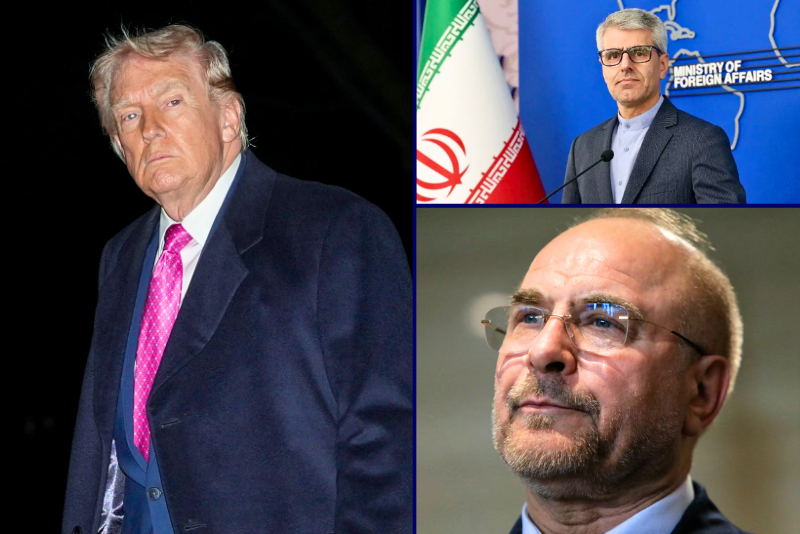
In an escalation of rhetoric amid an active regional conflict, President Donald Trump issued a blunt ultimatum to Tehran on Monday, threatening the “complete obliteration” of Iran’s vital civilian infrastructure if a comprehensive deal to end the month-long conflict is not reached “shortly.”
The president’s latest warning, delivered via social media and reinforced in comments to the New York Post, targets the heart of Iran’s economy and survival.
Trump further specified that if the Strait of Hormuz — the critical global energy chokepoint currently gripped by volatility — is not immediately reopened and a ceasefire finalized, the United States will expand its offensive to include:
- Electric generating plants: The systematic destruction of Iran’s power grid.
- Oil infrastructure: Attacks on oil wells and the critical Kharg Island export hub.
- Desalination plants: For the first time, the president explicitly mentioned targeting facilities that provide drinking water to millions of Iranians.
The conflict, which began on February 28th, has already seen the U.S. and Israel strike numerous military targets. While the president said on Monday that “great progress is being made” in talks facilitated by Pakistan, the reality on the ground remains chaotic, Middle East analysts say.

He further characterized the potential destruction as “retribution” for decades of Iranian-backed activities, referring to the “old Regime’s 47-year ‘Reign of Terror.’”
Despite President Trump’s optimistic tone about ongoing negotiations with Iranian Parliament Speaker Mohammad Bagher Qalibaf, Tehran has firmly denied any direct talks with the United States. This has fueled speculation that Pakistani officials have been mediating the indirect exchanges.
__________________________________________________________________________________
Pakistan’s Role
Immediately following the initial U.S. and Israeli strikes, Islamabad maintained a low-profile diplomatic outreach. On March 3rd, Foreign Minister Ishaq Dar told parliament that Pakistan had begun pushing back against what he described as “rigid” U.S. demands, and was suggesting alternative monitored frameworks to Tehran. During this period, Pakistan was one of several “friendly countries,” including Oman and Qatar, relaying messages back-and-forth. As the conflict intensified and traditional mediators like Qatar and Oman came under direct fire or faced increased regional pressure, Pakistan stepped into a more central role. By mid-March, Pakistan became the official “messenger” for the Trump administration’s comprehensive ceasefire proposal. A crucial factor in this shift was the relationship between President Trump and Pakistan’s Army Chief, Field Marshal Asim Munir, whom Trump has publicly praised. This military-to-military connection provided a reliable channel that bypassed standard diplomatic gridlock.
__________________________________________________________________________________
Nonetheless, Qalibaf, a former Islamic Revolutionary Guard Corps commander, further dismissed the reported diplomatic overtures as mere “cover” for the recent deployment of thousands of additional U.S. troops to the Middle East.
U.S. crude oil prices have surged since the conflict began, with domestic gasoline prices rising by more than a dollar per gallon. Iran has also countered by striking a water and electrical plant in Kuwait, in addition to targeting an oil refinery in Israel, signaling that any further escalation could likely result in a wider regional conflagration.
In Washington, the administration also faces pressure from vocal Trump critics on Capitol Hill. A group of senators, led by Elissa Slotkin (D-Mich.) and Tim Kaine (D-Va.), issued a letter on Monday criticizing the administration’s “lack of strategic foresight.” The senators questioned the administration’s recent decision to ease some sanctions on Russian and Iranian oil while simultaneously threatening to “obliterate” the infrastructure that produces it.
President Trump has since set an informal deadline of April 6th for Tehran to agree to a U.S.-led proposal from Washington. As the deadline approaches, the Pentagon continues to move assets into the region, preparing for what the president suggests could be the final phase of his “maximum pressure” campaign.
Stay informed! Receive breaking news alerts directly to your inbox for free. Subscribe here. https://www.oann.com/alerts
What do YOU think? Click here to jump to the comments!
Sponsored Content Below