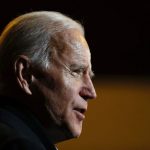
Photo by SAUL LOEB/AFP via Getty Images
 President Donald Trump became the first sitting president to observe arguments at the U.S. Supreme Court (SCOTUS) on Wednesday in the case that could determine America’s future.
SCOTUS is hearing arguments in the case Trump v. Barbara on the constitutionality of Executive Order 14160, issued on Trump’s first day in office in January 2025. Trump’s E.O., titled “Protecting the Meaning and Value of American Citizenship,” directs federal agencies to deny automatic U.S. citizenship to children born in the U.S. to parents who are in the country illegally or on temporary visas.
The Trump administration is arguing for a narrower interpretation of the Citizenship Clause in the 14th Amendment, which states that “all persons born or naturalized in the United States, and subject to the jurisdiction thereof, are citizens of the United States and of the State wherein they reside.”
BREAKING: President Trump departs the White House on his way to the Supreme Court, where he will be the first president in history to sit and listen to the court’s oral arguments as it weighs the president’s executive order ending birthright citizenship. | @DanaPerino… pic.twitter.com/xN0HPMUQGP
— Fox News (@FoxNews) April 1, 2026
Lower courts had blocked the order through nationwide injunctions, prompting the administration to seek expedited Supreme Court review. The case reached SCOTUS after a class-action lawsuit filed on behalf of affected families in New Hampshire.
The Supreme Court’s review in Trump v. Barbara offers an opportunity to address not only the merits of the citizenship policy but also the overuse of nationwide injunctions by single district judges. District court judges have repeatedly issued sweeping injunctions halting Trump’s immigration policies, including efforts to expedite removals and address related issues. These injunctions have stalled multiple Trump initiatives, from immigration enforcement to other regulatory actions. A ruling limiting this practice would strengthen presidential power and prevent activist judges from effectively running national policy from the bench.
But even more importantly, the Trump administration argues that the 14th Amendment’s “subject to the jurisdiction thereof” language was never intended to grant automatic citizenship to children of illegal immigrants or temporary visitors. The clause was ratified in 1868 primarily to ensure citizenship for newly freed slaves after the Civil War. Historical records from the congressional debates show that senators explicitly excluded children of foreign diplomats and those who do not have full allegiance to the U.S.
Tomorrow, the Supreme Court will hear one of the most consequential cases of the last 50 years: Whether the 14th amendment grants birthright citizenship to the children of illegal aliens.
When I worked in the first Trump admin, I drafted the original executive order ending…
— Theo Wold (@RealTheoWold) April 1, 2026
“This amendment, which I have offered, is simply declaratory of what I regard as the law of the land already, that every person born within the limits of the United States, and subject to their jurisdiction, is by virtue of natural law and national law a citizen of the United States. This will not, of course, include persons born in the United States who are foreigners, aliens, who belong to the families of ambassadors or foreign ministers accredited to the Government of the United States, but will include every other class of persons,” argued Republican Michigan Sen. Jacob Howard in Congress in 1866. “It settles the great question of citizenship and removes all doubt as to what persons are or are not citizens of the United States.”
Children of illegal immigrants, who are subject to deportation and not fully under U.S. jurisdiction in the same way as citizens or lawful residents, fall outside this category, according to the Justice Department’s position.
This interpretation aligns with the Supreme Court’s 1898 decision in United States v. Wong Kim Ark, which granted citizenship to a child of legal Chinese immigrants who were paying taxes, had allegiance to the U.S., and were not living here in any diplomatic capacity.
“A child born in the United States, of parents of Chinese descent, who, at the time of his birth, are subjects of the Emperor of China, but have a permanent domicil and residence in the United States, and are there carrying on business, and are not employed in any diplomatic or official capacity under the Emperor of China, becomes at the time of his birth a citizen of the United States, by virtue of the first clause of the Fourteenth Amendment of the Constitution,” the Supreme Court stated.
No Supreme Court precedent has ever held that illegal immigrants’ children should receive automatic citizenship under the clause. Most countries, including the United Kingdom, France, and other European countries, do not grant unrestricted birthright citizenship. Many require at least one parent to be a citizen or legal resident. The U.S. stands nearly alone among Western countries in allowing unrestricted birthright citizenship.
SCOTUS will also hear arguments to end automatic birthright citizenship on national security grounds.
In January, Joshua Steinman, a former Trump National Security Council official, filed an amicus brief in Trump v. Barbara detailing how unrestricted birthright citizenship creates an exploitable loophole for adversarial nations.
.@JoshuaSteinman has submitted a national security-related amicus brief in the pending birthright citizenship case before SCOTUS.
This is a critical angle that has gone largely ignored in discussion of the case.
He writes in part:
“With a round-trip plane ticket, a malign… pic.twitter.com/ASMhGXVn3j
— Benjamin Weingarten (@bhweingarten) January 28, 2026
Steinman argued that countries such as China, Russia, and Turkey have already used the policy to embed long-term influence agents and intelligence operatives whose U.S.-born children enjoy full citizenship rights, including access to sensitive positions, security clearances, and political influence without the scrutiny applied to non-citizens.
Trump’s historic decision to attend the arguments in person reflects the importance of the case, which will test core questions of sovereignty and presidential power. The administration views this challenge to long-standing birthright citizenship practices as central to its immigration agenda and to the broader effort to restore the original meaning of the 14th Amendment.