Global energy flows are being rewired across Eurasia as the Russia-Ukraine war and the latest U.S.-Iran conflict disrupt Gulf energy flows in what may be the worst energy shock on record.
One major new development is that roughly 20% of global LNG flows remain shut in the Gulf region because of the Hormuz chokepoint, with QatarEnergy warning last week that 17% of its LNG export capacity could be offline for three to five years.
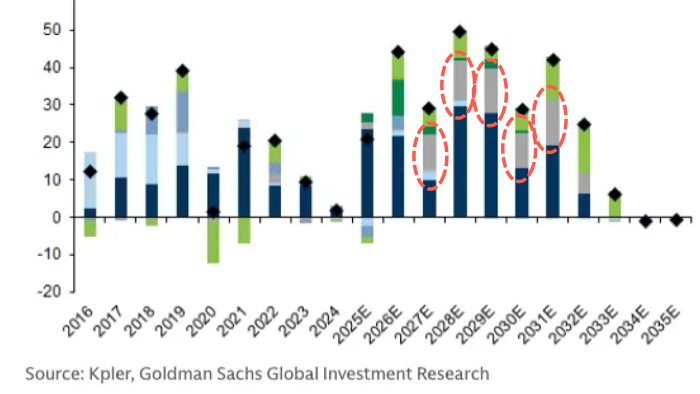
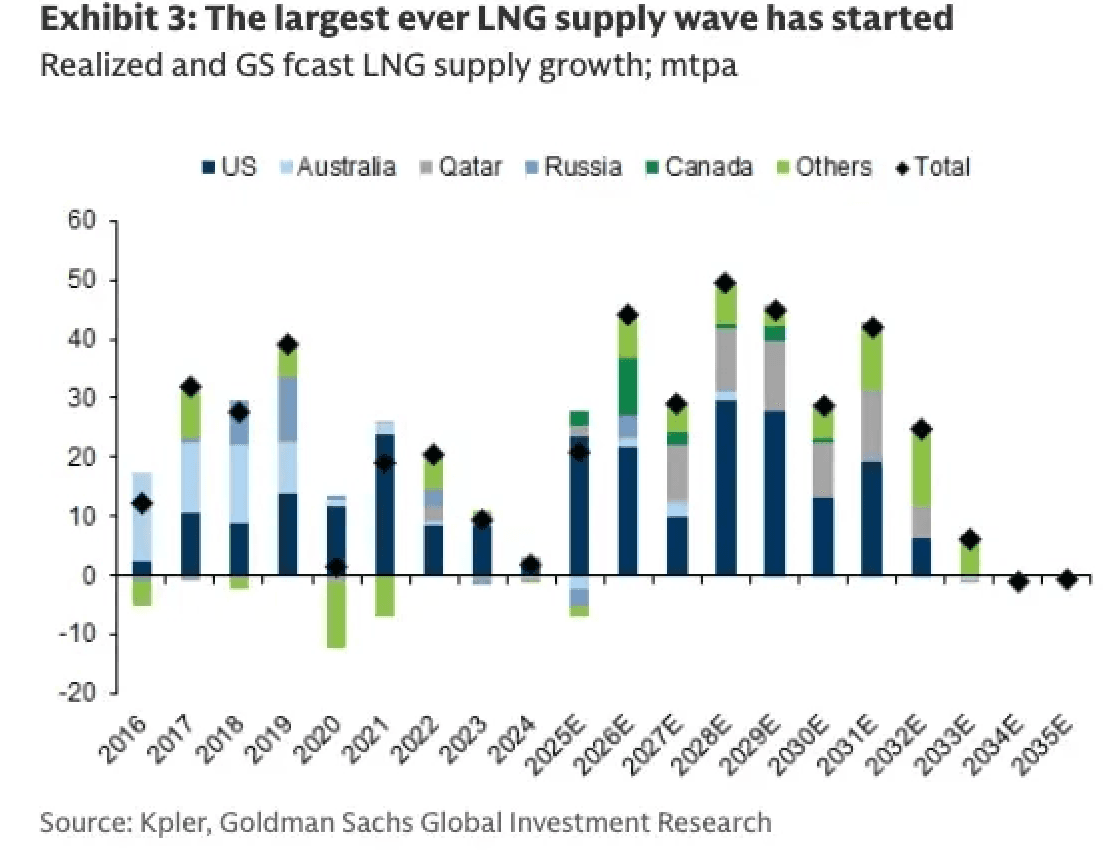
That brings us to Goldman commodities expert Samantha Dart’s warning to clients about five months ago, in which she said the “largest-ever LNG supply wave” was set to hit, pushing prices lower.
The question now is whether Dart’s warning still holds, given that the Iranian attack on Qatar’s Ras Laffan gas facility wiped out about 17% of the country’s LNG export capacity, causing an estimated $20 billion in lost annual revenue and threatening supplies to Europe and Asia. Repairs are expected to take three to five years.
Dart’s pre-US-Iran war view was that natural gas prices would remain relatively stable through 2027 before peak glut materializes by the end of the decade, triggering U.S. LNG export cancellations. However, the Ras Laffan disruption may have derailed that oversupplied outlook, as LNG markets could remain tight for years.
Another key development, with Qatari LNG flows hampered, is a recent note from Criterion Research President James Bevan, who wrote: “What had been framed as a two-horse race for global LNG market share now looks considerably more one-sided. The beneficiary is clear: U.S. Gulf Coast LNG.”
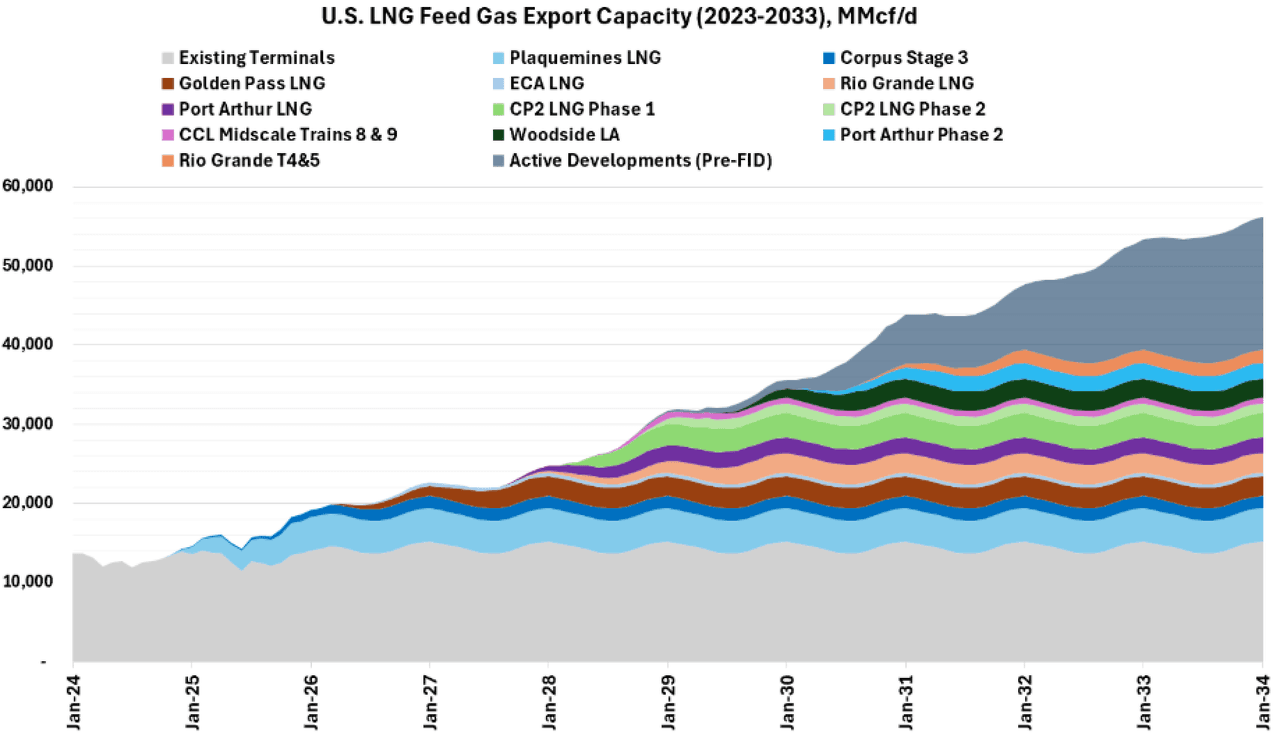
And just like that, with Qatari LNG flows hampered for years, the question now is whether Dart’s bearish forecast of the “largest-ever LNG supply wave” will likely have to be revisited. We’ll see what she says in the next update.