Energy headlines summary:
-
Iran says upstream oil and gas assets are under attack for first time since war began
-
Iraq reroutes some flows through Ceyhan Pipeline to Turkey
-
Hormuz traffic remains de-minimus
-
Iran reiterates new rules in place for Hormuz transit
-
“The blockade is now the worst disruption to oil flows ever. Real barrels are now disappearing from global oil markets, which can lead to demand destruction in the weeks to come.”
-
Iranian state TV confirms the South Pars gas field was hit by Israeli jets, marking a major escalation.
-
Iranian state TV says South Pars Phases 3, 4, 5, and 6 were hit by Israeli airstrikes.
* * *
Iranian Oil, Gas Assets Under Attack
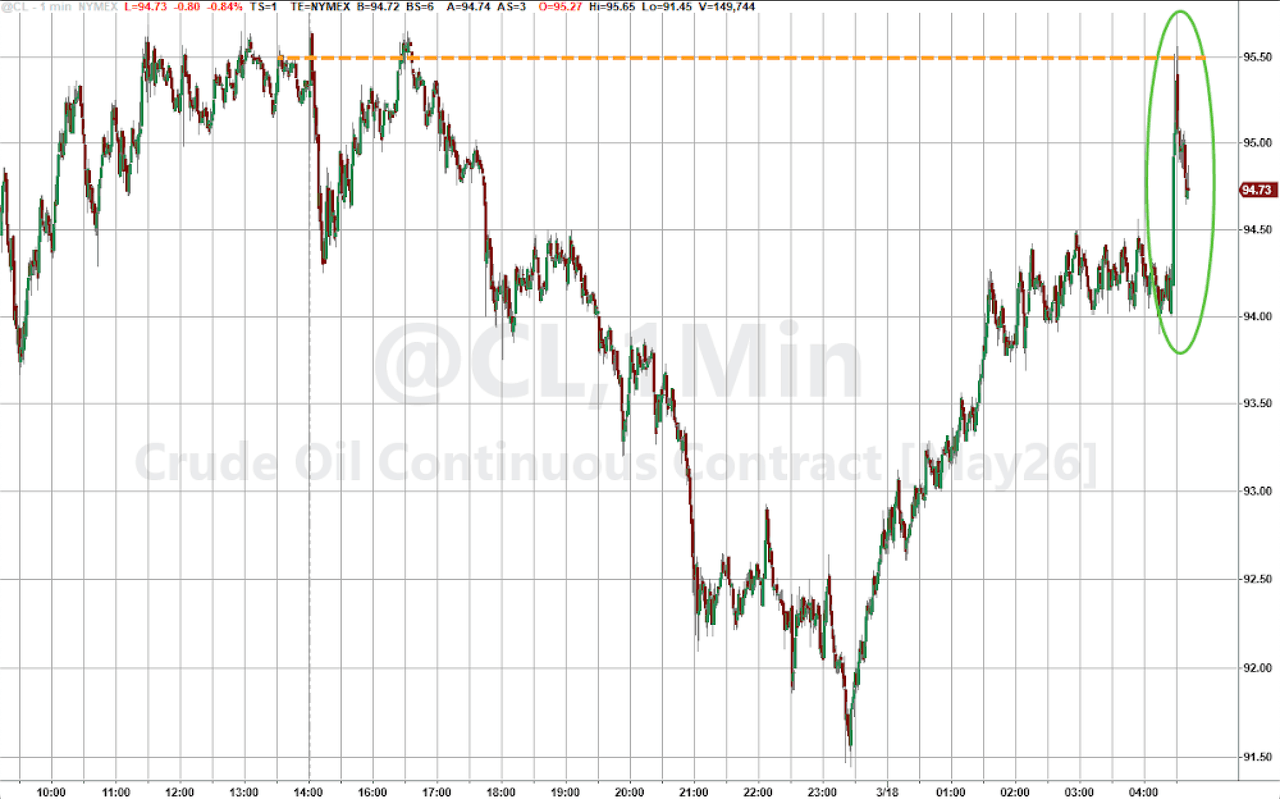
Crude oil futures are surging after Iranian state TV reported that part of the South Pars gas field in the Persian Gulf area had been hit by an airstrike.
Bloomberg reports that Israel appears to be behind the air strike on Iran’s energy assets.
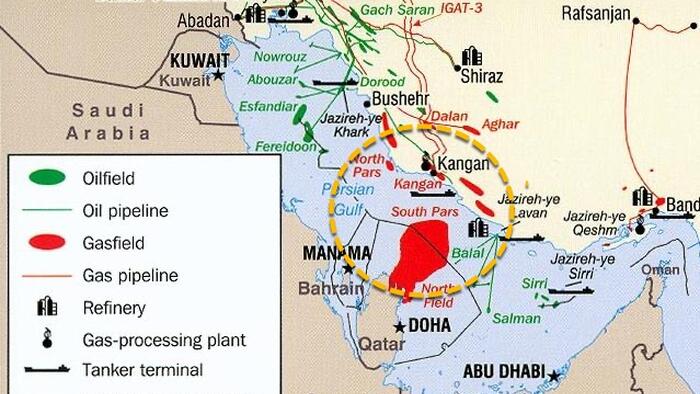
South Pars is the backbone of Iran’s gas system and part of the world’s largest natural gas field, which Iran shares with Qatar, where the same reservoir is called the North Field.
Oil and petrochemical facilities in nearby Asaluyeh also came under attack, it added.
An attack, if confirmed, would mark the first time Iran’s upstream oil and gas facilities have been targeted in this war.
According to the Iranian oil ministry’s official news service, Shana, daily gas production at South Pars, which is shared with Qatar, reached a record 730 million cubic meters in 2025.
Iranian state TV says that South Pars phases 3, 4, 5, and 6 were hit by Israeli air strikes. This suggests damage to core upstream gas infrastructure at the backbone of Iran’s energy system, marking a major escalation in Gulf energy risk
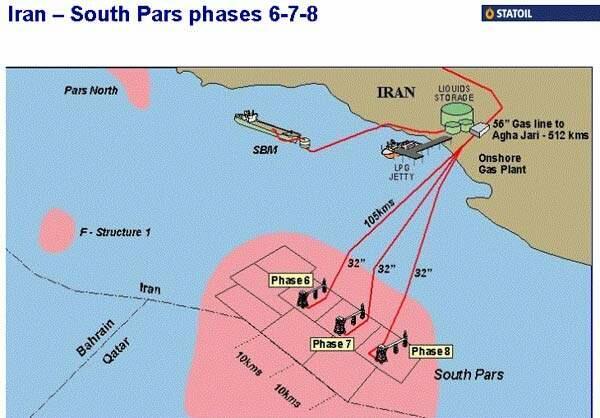
Most of Iran’s gas production comes from South Pars, making it central to power generation, industrial feedstock, petrochemical production, and winter heating demand.
Bloomberg noted that the gas field is the “key source of pipeline gas to Turkey via the Tabriz–Ankara line. Disruptions to those flows could force Ankara to seek more spot LNG on already tight global markets.”
WTI futures quickly surged to $95/bbl on the news.
Operation Epic Fury appears to have shifted toward targeting the IRGC’s funding lines. This was evident last week with strikes on the Kharg Island export hub.
Iraq Reroutes Oil From Hormuz, through Ceyhan Pipeline to Turkey
Brent crude futures roller-coastered, oscillating between $100 and $103 per barrel after news broke that Iraq had found an initial (though still limited) workaround for the Hormuz chokepoint by restarting exports through Turkey’s Ceyhan port.
Bloomberg reports that North Oil Co.’s oil pipeline to Ceyhan port, with an expected initial export capacity of 250,000 barrels, has begun operation. That is in addition to 210,000 barrels per day from Kurdistan through the northern pipeline, according to Oil Minister Hayyan Abdul Ghani.
Ceyhan exports crude from the Kurdistan and Kirkuk fields (Iraq) to the Mediterranean port, effectively bypassing the chaos at the Hormuz chokepoint and in the Gulf region.
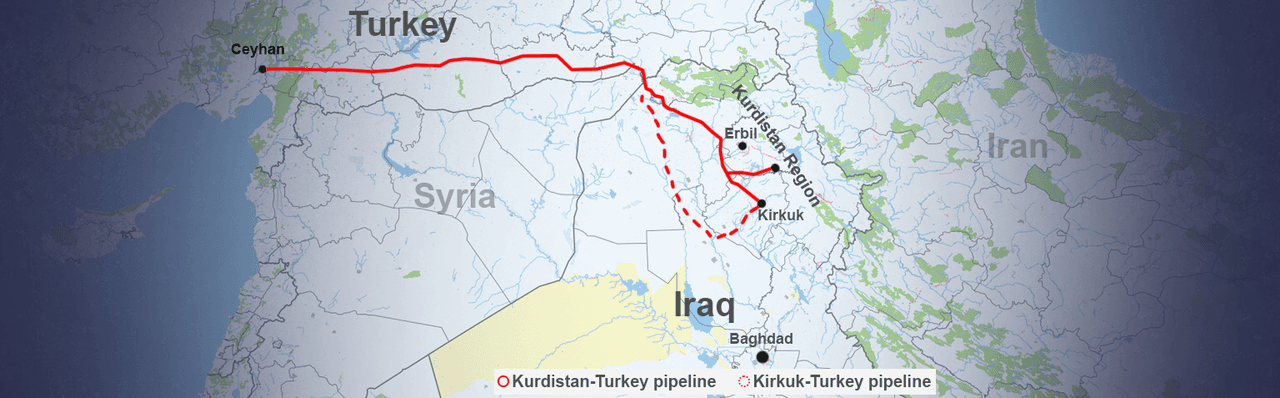
Disruption of tanker flows in the critical waterway forced Iraqi oil production to plunge to about 1.4 million barrels per day, roughly one-third of pre-Hormuz closure levels.
Three weeks into the US-Iran conflict, tanker activity on the waterway has slowed to a crawl, at just about 400,000 barrels per day, compared to the pre-Hormuz closure average of 14 million barrels per day.
Kpler oil analyst Muyu Xu warned, “The blockade is now the worst disruption to oil flows ever. Real barrels are now disappearing from global oil markets, which can lead to demand destruction in the weeks to come.”
Iraq is following Saudi Arabia’s playbook of shipping crude through pipelines rather than through Hormuz as IRGC drone and missile threats persist. Saudi Aramco shifted its crude flows through the East-West pipeline to export terminals at Yanbu and Al Muajjiz on the kingdom’s Red Sea coast.
Iran Remains In Control Of The Strait
Meanwhile, Iran-linked vessels accounted for 35% of the 20 crude tankers that made outbound Hormuz transits in the first week of the conflict, according to Kpler. About a week later, that number rose to five of the eight tankers that left the region, suggesting that Iran’s control of the critical waterway has significantly increased.
On Tuesday, the conflict escalated further with the confirmation of the killing of Ali Larijani, secretary of Iran’s Supreme National Security Council.
According to Aaron Stein, president of the Foreign Policy Research Institute, “The Larijani killing is a big deal, and may make Iran more desperate to disrupt oil flows.”
“Trump is obviously being pressured to escort tankers, so we’re in for the possibility of very tense US operations in ways I’m certain the Navy would like to avoid,” Stein said.
On Wednesday, Iran’s Foreign Minister Abbas Araghchi told Al Jazeera about new rules that should be imposed on the critical waterway.
“We need to design new arrangements for the Strait of Hormuz and the way ships pass through it in the future after the war so that peaceful navigation through this waterway can be permanently maintained under clear regulations with consideration for Iran’s interests and the interests of the region,” Araghchi said.
He said, “It should guarantee that safe passage through the strait takes place under specific conditions,” adding that conditions should “ensure peacefulness. We do not want to witness another war in the region and we do not want to see the strait closed again.”
Hormuz Traffic Remains Practically ‘Halted’
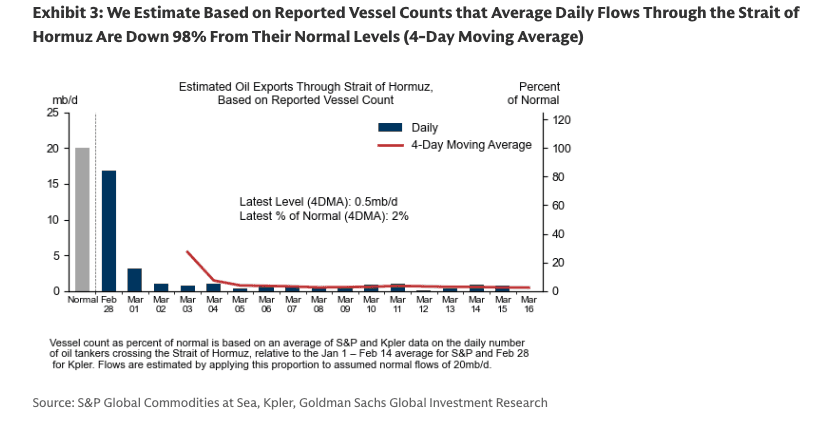
Goldman analysts, led by Yulia Zhestkova Grigsby, showed clients on Tuesday that shipping traffic through Hormuz remains down 98% from normal levels (4-day moving average).
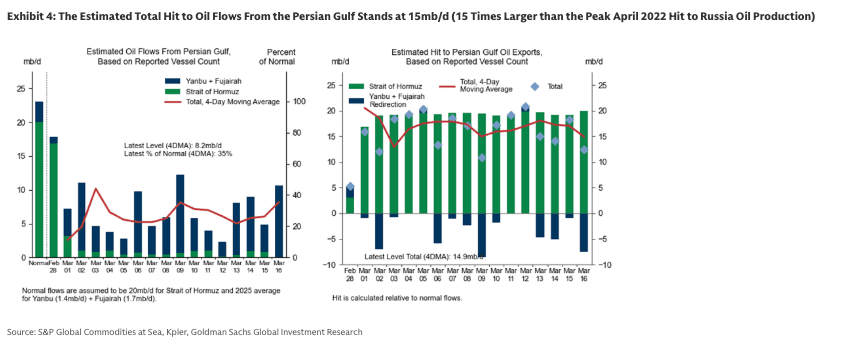
The estimated total hit to oil flows from the Persian Gulf stands at 15 mb/d, 15 times larger than the peak April 2022 hit to Russian oil production.
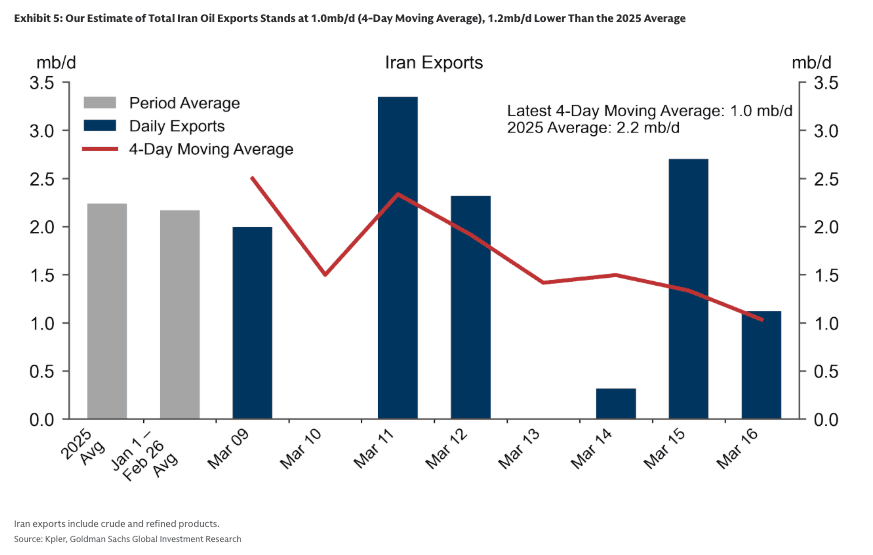
Iranian crude exports dominate the Strait.
“With no end in sight to hostilities, shut-ins rising on a daily basis, and the Strait technically closed, we remain of the view that Brent is set to remain in a new, higher $95-to-$110 range,” Westpac Banking analyst Robert Rennie wrote in a note.
“Were we to see a major refinery plant hit or confirmation of additional mining of the strait, we would expect that range to extend higher by another $10-$20,” Rennie added.
The takeaway here is that Gulf countries, such as Iraq and Saudi Arabia, are rerouting crude flows from tanker transit through the waterway to pipelines out of the hostile region, as Iran remains largely in control of the Strait, necessarily (and dramatically) reducing global energy supply (for longer).
The Strait of Hormuz situation won’t return to its pre-war status.
— محمدباقر قالیباف | MB Ghalibaf (@mb_ghalibaf) March 17, 2026
…and now he is reportedly dead (among many other Iranian leaders).